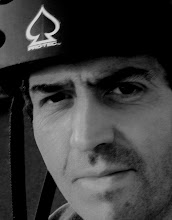
"Started the day at 6am with a five miler in the rain. Watched Rocky IV while recovering and ate two packs of Hobnobs, washed down with milk. Headed to the gym and trained legs for a couple of hours. Pasta for lunch. Sprint session in the afternoon, then back to the gym for heavy bag work and a circuit with the lads. Puked outside and thought I was going to die after staggering home. A good day, though might have to shorten tomorrow's run a bit."
I was never really one for keeping a training diary, but that rare entry from a 1991 notebook pretty much sums up my exercise regime as a 24-year-old. Although I wasn't a professional athlete, training was pretty much all I thought about back then outside of work. Workouts weren't satisfying unless they left me utterly spent and convinced I was about to check into the gym user's afterlife equivalent of Valhalla. I shared that philosophy with all my equally obsessed training partners and, although we all knew about the dangers of overtraining, we cared little. Any time we encountered a plateau in terms of physical progression, we just trained harder and ate more. Nosebleeds, fainting and violent diarrhoea were par for the course. Science or common sense didn't really come into it.
I always knew trying to replicate my training regime of 20 years ago was going to be a challenge. That was part of the attraction, but I also knew I couldn't realistically follow an exact replica of my exercise programme back then. For starters, I rarely kept a record of what I was doing for more than a few days, quickly becoming bored of logging it all. Quite simply, I trained hard, burned out for a bit, then trained hard again.
I also had no responsibilities when I was 24, beyond my job as a reporter on a weekly newspaper. Now I'm a husband and father. I'm also freelance, which means I can be working at any hour of the day, seven days a week. I need my sleep. I have a catalogue of niggling injuries, many of which were sustained in my twenties. I ache more these days and don't have as much surplus energy as I did 20 years ago.
The first couple of weeks of Project 24 were therefore a nightmare of fatigue and crankiness. I crashed straight into a six days a week routine of heavy gym work, circuits and road running. I got dark shadows under my eyes and my sleep patterns took a hammering. My right hip became sore from pounding the roads and, whilst I made some gains in terms of strength, I'd be lying if I said it was an enjoyable process. My fitness improved, but I couldn't shake off that sense of continually running on empty.
I'd also be lying if I said I hadn't skipped a few days here and there. I did the same 20 years ago, usually because of overtraining or a work related late night. But now, at the beginning of March, I'm finally coping with the routine. Admittedly, it isn't completely identical to that of 1991 as sessions are shorter and I'm not wearing a pair of black Reebok boots, huge baggy trousers and a peach coloured XXXL muscle top, but training is more focused and certainly more intense in many respects.
I'll blog again shortly about specific routines, but I wanted to post a few key points about what I've learned so far with this experiment. A lot of it is common sense and won't be anything new to those who train regularly, but here you are anyway.
Firstly, proper recovery is vital. Twenty years ago, recovery was something we did while lying unconscious on the gym floor, or stopping to throw up on a run. The brief rest between sets of exercises was also classed as recovery. Now, it means building in proper rest days, or periods where you're coasting along doing something active, but fun. The bulk of my active recovery involves skateboarding, surfing or trundling around on my bike. But a rest day is a rest day.
Nutrition is also an absolutely critical factor. Granted, eating the right stuff is important at any age, but when you're 24 and training hard, you can eat pretty much whatever you like. Eating anything as a 44-year-old isn't an option. I've been a vegetarian for nearly 30 years, but that doesn't necessarily mean I continually follow a healthy diet. The biscuits, jam sandwiches and enormous bowls of pasta that were my fuel 20 years ago have, largely, been replaced with more fruit, loads of beans, pulses and nuts, all washed down with copious amounts of water. I still eat a lot of pasta and occasionally give in to call of the Biscuit Sirens, but my diet is pretty good. I don't drink alcohol at all these days either as it makes me feel like I've been poisoned. I frequently get asked how, as a vegetarian, I can get enough protein to sustain a heavy training schedule, but it's never been a problem. I drink milk, eat cheese (in moderation) and eggs. The beans and lentils I consume also provide me with more than enough protein. Just for the record, I don't take supplements and have always trained drug free.
Oddly, I've developed a craving for porridge (oatmeal). Despite being Scottish, I normally hate the stuff and, if left with no choice but to eat it, I'd cover it in sugar or honey. Now, I want it pure - made with water and sugar/salt free, and usually served with fruit. It fuels my training better than anything I could buy.
Unsurprisingly, injury management is a big issue these days. As anyone who's read earlier blog postings will know, I fractured my shoulder skateboarding just over a year ago, partially detaching my supraspinatus tendon in the process. Wishing to avoid surgery, I've trained around and through this injury and have regained pretty much full strength and range of motion. It'll never be perfect, but the last year of dealing with this problem has convinced me that, for some injuries at least, the recommended conservative treatments are no substitute for just listening to your own body and pushing the affected area as hard as you can possibly handle. There's always something you can do, even if you can't directly train the torn/broken bit. For much of last year, I was unable to bench press, or do many push-ups, but I found decline bench press reasonably comfortable. By working on that and gradually adding tiny increments to conventional bench press, I'm now able to press my own bodyweight again. Being properly warmed up before pushing yourself hard is sensible, particularly if you have injuries, or want to avoid more.
Intensity saves time and increases gains. Time constraints, and a need to have an actual life, means I can no longer afford to spend two hours in the gym. I need to get in, do my thing and get out again as quickly as possible. I train fast, but not at the expense of good form and push hard on every set. That saves me time and means I'm getting the maximum benefit from the session. Outside of the gym, I've substituted long, plodding runs (with their associated hip and knee issues) for short sprint and hill sprint sessions. "Talking pace" aerobic activity is something for activity recovery days only and high intensity training, such as Tabata, is where it's at (I'll blog about Tabata some other time). Hard and fast ramps up the metabolism and keeps it ticking along during the day, which is important for those of us who type for a living.
The need for intensity leads neatly onto the requirement for mental conditioning. Training hard when you're young and have nothing else to do is pretty easy. Doing it in your forties, fifties and beyond is much more of a challenge. I do understand why people my age jack in regular exercise programmes and end up on the metaphorical treadmill of stop-start training, never making any gains. But we can't allow ourselves to fall victim to this. An hour out of your day is nothing. If you have a family, then you're duty bound to take care of yourself. Be an uncompromising bastard when it comes to exercise. Hammer yourself in the gym, on the bike, in the pool. Feel the pain. Ignore your whiny internal voice. Ditch the magazines on the cardio equipment and switch off the TVs. Stop talking. Sweat, puke and fight. There is no quick fix and it's not supposed to be easy. Twenty years ago training was something I did with my friends to get fit, win medals and (vainly) look huge in a t-shirt. Now it's just warfare, with the forces of age, convention, and all manner of other lifestyle bullshit as the enemy.
It sounds like some grim Spartan nightmare but I love it and I feel great. Yes, I'm occasionally a little tired and sore and I'm going slightly deaf from the blaring of my iPod in the gym, but I do feel much closer to how I did 20 years ago. I've packed on muscle, improved my desk bound posture and lost some flab. But it's the sense of general physical reawakening that's the most powerful incentive to keep going. I feel strong, bouncy, charged up and better able to face whatever the world throws at me. When I was 24 I felt invincible. Twenty years later I know from experience that nobody is invincible or immortal, but even in your forties you can still live like you're an unstoppable force of nature.
Friday, 2 March 2012
Wednesday, 14 September 2011
Project 24
When I was 12 I crashed my beloved racing bike. It was my own fault (as was usually the case). I'd been casually riding, no-handed, in rush hour traffic along Edinburgh's very busy Corstorphine Road and had thought it would look cool if I checked my Timex watch as I passed the morning commuters. For some reason, I slid forward on the seat and my crotch hit the handlebars. This unweighted the rear wheel of the bike and sent it into the path of a bus. The bus swerved to avoid the unfolding disaster, but clipped my rear wheel, catapulting me into a group of shocked pedestrians standing at a bus stop. The bike was instantly wrecked in the collision and I smacked my left knee hard on the pavement when I eventually landed. As my knee ballooned to comical proportions, I collected what was left of my bike and hobbled off in agony, declaring "I'm fine!" to the open mouthed bus queue. An x-ray later showed I'd chipped a small piece off my kneecap. That healed up ok, but the injury triggered some weird bone condition that ensured my knee would swell up whenever I exercised my legs.
This niggling knee problem meant my early teens were largely free from the rigours of physical education. My doctor, who was firmly in the "don't do anything at all to aggravate this" school of injury management, had to supply regular medical paperwork to the school to prove I wasn't just a slacker. It was a frustrating and humiliating period in which my fitness suffered badly and I developed a pathological dislike of physical education teachers. Team sports also became a complete turn-off as, during the rare occasions I felt pain free enough to enter the field of play, I'd have to listen to endless bad tempered advice about my performance from those peers deemed to possess sporting talent and leadership ability. I mentally added every one of them to a special list - not for future execution in my own republic - but for a time when I was certain I'd metaphorically demolish them in a gym, track, or on a playing field.
What ultimately sorted my knee problem out was hillwalking and climbing, activities which strengthened my legs, improved my fitness and boosted my self-confidence. I started walking in the hills aged 14 and this activity alone transformed me from a podgy teen into someone who craved solo physical challenges in wild places. Weekends were spent undertaking longer and longer expeditions into the hills and mountains, in all weathers, learning the skills needed to travel and survive in remote and hostile environments.
I discovered weight training as a 16-year-old, introduced to the gym by a mountaineering maths teacher from school. Unusually for a climber back then, he advocated pumping iron as a training aid. I connected instantly with an activity that represented an opportunity to speed up my physical transformation and threw myself into training to such a degree I had to take several days off school, unable to walk or sleep. Once the aches had subsided I took a more structured approach to training, joining a city gym where I graduated from cables and machines to the heady heights of free weights. The gym was full of huge, angry lunatics, many taking copious amounts of steroids, but I kept my head down and trained hard. After a year of punishing myself three or four times a week, I was invited into the hardcore inner sanctum of the group, though then, as now, I trained drug free. By now I was also running a bit, switching between sprint training and longer distances and doing boxing training.
By the time I hit my twenties I was exercising hard five or six days a week. Involved in competitive athletics, (albeit at a very modest level), bodybuilding and the martial arts, training was central to my life. Personal bests, targets, poundages, distances, and times pretty much defined who I was back then. Sure, I threw up a lot and became a javelin injury textbook case, but being physically strong and fit was everything to me. The volume of training I engaged in back then was enormous, but I vowed I'd stick with it for the rest of my life.
Of course, that wasn't how things panned out. I got married, had a son and ended up with a job that ate up my energy and spare time. I still trained, but not to the extent I had done in my early twenties. It wasn't until I hit my mid thirties that some semblance of a respectable exercise routine returned to my life, but it was never anything approaching what I'd put myself through as a younger man. Although I knew people still training like they had done when younger, I figured they were the exception. I never wanted my family to think I was selfish, so my approach to exercise became much more moderate.
Fast forward to the present day. I'm 44 and, despite some fairly significant injury problems (mostly skateboard related), I'm training at a decent level again. Indeed, I have done for most of my forties. But it recently hit me that there's much more in the tank. To that end I've decided to engage in an experiment I've christened Project 24. The concept came to me when I was out for a run about a week ago. I was reflecting on the stop-start nature of my physical activity over the past twenty years and how easy it is to let the demands of day to day life erode something that's a fundamental part of who you are. But compromising and slowing down shouldn't be inevitable. I suddenly thought how it might be interesting to see if I could, twenty years on, follow the same routines I did back in 1991. I have some training records from back then and a good memory for the structure my week had as a 24-year-old, so I'm doing it all again.
So, that's Project 24 - my own self-indulgent bit of exercise time travel. It might sound like some kind of midlife crisis, but rest assured it's not. I'm more than happy with my lot in life, but the time has come to stop the cruise/burst/cruise approach to training and open up the throttle. As I write this, I'm back on a hard routine of weights, running, boxing training and circuits. I intend to better a number of personal bests and unlock some new goals along the way too. Right now I'm absolutely shattered, but that'll pass. I've already bettered my old personal best in deadlift, setting a new mark of 230 kilos, but I know other targets will be harder to pass. I'll make it though. Where? I don't know. I might decide to run an ultra, or climb something, or undertake some as yet unspecified challenge to get a competitive benchmark on my progress, but it'll also be a blast to just, once again, find my limits and pass them. I will puke and I know I'll recover slower than I did 20 years back, but I'll do what I've always done - ignore convention and advice and steam ahead regardless. I'll post updates on my progress, provided I'm awake. And for the record, I'm still skateboarding.
This niggling knee problem meant my early teens were largely free from the rigours of physical education. My doctor, who was firmly in the "don't do anything at all to aggravate this" school of injury management, had to supply regular medical paperwork to the school to prove I wasn't just a slacker. It was a frustrating and humiliating period in which my fitness suffered badly and I developed a pathological dislike of physical education teachers. Team sports also became a complete turn-off as, during the rare occasions I felt pain free enough to enter the field of play, I'd have to listen to endless bad tempered advice about my performance from those peers deemed to possess sporting talent and leadership ability. I mentally added every one of them to a special list - not for future execution in my own republic - but for a time when I was certain I'd metaphorically demolish them in a gym, track, or on a playing field.
What ultimately sorted my knee problem out was hillwalking and climbing, activities which strengthened my legs, improved my fitness and boosted my self-confidence. I started walking in the hills aged 14 and this activity alone transformed me from a podgy teen into someone who craved solo physical challenges in wild places. Weekends were spent undertaking longer and longer expeditions into the hills and mountains, in all weathers, learning the skills needed to travel and survive in remote and hostile environments.
I discovered weight training as a 16-year-old, introduced to the gym by a mountaineering maths teacher from school. Unusually for a climber back then, he advocated pumping iron as a training aid. I connected instantly with an activity that represented an opportunity to speed up my physical transformation and threw myself into training to such a degree I had to take several days off school, unable to walk or sleep. Once the aches had subsided I took a more structured approach to training, joining a city gym where I graduated from cables and machines to the heady heights of free weights. The gym was full of huge, angry lunatics, many taking copious amounts of steroids, but I kept my head down and trained hard. After a year of punishing myself three or four times a week, I was invited into the hardcore inner sanctum of the group, though then, as now, I trained drug free. By now I was also running a bit, switching between sprint training and longer distances and doing boxing training.
By the time I hit my twenties I was exercising hard five or six days a week. Involved in competitive athletics, (albeit at a very modest level), bodybuilding and the martial arts, training was central to my life. Personal bests, targets, poundages, distances, and times pretty much defined who I was back then. Sure, I threw up a lot and became a javelin injury textbook case, but being physically strong and fit was everything to me. The volume of training I engaged in back then was enormous, but I vowed I'd stick with it for the rest of my life.
Of course, that wasn't how things panned out. I got married, had a son and ended up with a job that ate up my energy and spare time. I still trained, but not to the extent I had done in my early twenties. It wasn't until I hit my mid thirties that some semblance of a respectable exercise routine returned to my life, but it was never anything approaching what I'd put myself through as a younger man. Although I knew people still training like they had done when younger, I figured they were the exception. I never wanted my family to think I was selfish, so my approach to exercise became much more moderate.
Fast forward to the present day. I'm 44 and, despite some fairly significant injury problems (mostly skateboard related), I'm training at a decent level again. Indeed, I have done for most of my forties. But it recently hit me that there's much more in the tank. To that end I've decided to engage in an experiment I've christened Project 24. The concept came to me when I was out for a run about a week ago. I was reflecting on the stop-start nature of my physical activity over the past twenty years and how easy it is to let the demands of day to day life erode something that's a fundamental part of who you are. But compromising and slowing down shouldn't be inevitable. I suddenly thought how it might be interesting to see if I could, twenty years on, follow the same routines I did back in 1991. I have some training records from back then and a good memory for the structure my week had as a 24-year-old, so I'm doing it all again.
So, that's Project 24 - my own self-indulgent bit of exercise time travel. It might sound like some kind of midlife crisis, but rest assured it's not. I'm more than happy with my lot in life, but the time has come to stop the cruise/burst/cruise approach to training and open up the throttle. As I write this, I'm back on a hard routine of weights, running, boxing training and circuits. I intend to better a number of personal bests and unlock some new goals along the way too. Right now I'm absolutely shattered, but that'll pass. I've already bettered my old personal best in deadlift, setting a new mark of 230 kilos, but I know other targets will be harder to pass. I'll make it though. Where? I don't know. I might decide to run an ultra, or climb something, or undertake some as yet unspecified challenge to get a competitive benchmark on my progress, but it'll also be a blast to just, once again, find my limits and pass them. I will puke and I know I'll recover slower than I did 20 years back, but I'll do what I've always done - ignore convention and advice and steam ahead regardless. I'll post updates on my progress, provided I'm awake. And for the record, I'm still skateboarding.
Friday, 17 June 2011
The Day Job
Believe it or not, I've never been much of a self publicist. I'm part of a generation of journalists who entered the profession just as new technology was being introduced into the workplace. While most of us were more than delighted to dump clunky manual typewriters for tiny, first generation Macs, none of us foresaw a day when we'd be competing for attention on the Internet. At the risk of sounding like a boring old fart, I'm quite uncomfortable with the concept of highlighting my work. It just feels slightly distasteful, like I'm shouting "look at me!"
Obviously, I accepted some time ago that having an Internet presence is vital, even for journalists. I possess a blog, along with Facebook, Twitter and LinkedIn accounts. As much as I've embraced new media, I've been very poor at showcasing any actual work online. Indeed, my lack of blogging over the past month is a result of spending much of my time working on what might be termed traditional media jobs, for newspapers, magazines and television. The latter in particular has kept me pretty busy recently. Since September, I've been providing local news coverage for STV North. It's a lot of fun and, for a print based journo with a little bit of radio experience, it's been a steep, but exciting learning curve. They've not asked me to cover any skateboarding stories yet, but I remain hopeful...
As weird as I find the process of highlighting my work beyond its original medium, I've been nagged by more media savvy colleagues into getting some of it up here. If nothing else, it will dispel the myth that I spend my days in skate parks and hospital accident and emergency rooms.
So, as a start, here's some stuff I've just done for the lovely people at Condé Nast in New York.
http://www.concierge.com/ideas/activeadventure/tours/502503
It's from their Concierge.com website, which is an extremely useful tool for travellers wanting to go a bit deeper and think outside the traditional vacation box. I'll do my best to get other bits and pieces posted up here, in between visits to accident and emergency and self conscious appearances on TV...
Obviously, I accepted some time ago that having an Internet presence is vital, even for journalists. I possess a blog, along with Facebook, Twitter and LinkedIn accounts. As much as I've embraced new media, I've been very poor at showcasing any actual work online. Indeed, my lack of blogging over the past month is a result of spending much of my time working on what might be termed traditional media jobs, for newspapers, magazines and television. The latter in particular has kept me pretty busy recently. Since September, I've been providing local news coverage for STV North. It's a lot of fun and, for a print based journo with a little bit of radio experience, it's been a steep, but exciting learning curve. They've not asked me to cover any skateboarding stories yet, but I remain hopeful...
As weird as I find the process of highlighting my work beyond its original medium, I've been nagged by more media savvy colleagues into getting some of it up here. If nothing else, it will dispel the myth that I spend my days in skate parks and hospital accident and emergency rooms.
So, as a start, here's some stuff I've just done for the lovely people at Condé Nast in New York.
http://www.concierge.com/ideas/activeadventure/tours/502503
It's from their Concierge.com website, which is an extremely useful tool for travellers wanting to go a bit deeper and think outside the traditional vacation box. I'll do my best to get other bits and pieces posted up here, in between visits to accident and emergency and self conscious appearances on TV...
Wednesday, 13 April 2011
Shouldering the blame
It's 0700hrs on a perfect April morning in Argyll and I'm doubled over retching on a forest trail, the sounds of my discomfort providing a sharp contrast to the birdsong and wind whispering through the pines. A deer has stopped to watch me on the track ahead. Rightly guessing I pose no threat, it wanders off, perhaps contemplating whether or not it should call for an ambulance (driven by specially trained woodland creatures). I catch my breath, take another look at the stunning view across Kilbrannan Sound to the island of Arran, and start running again.
I'm on a section of the Kintyre Way trail that runs from Saddell on the east of the peninsula to Bellochantuy on the west coast. Since I set off an hour previously, I've done nothing but run uphill and now my body is complaining. Apart from feeling sick, my trashed shoulder is starting to ache from all the pumping my arms are doing to drive my rubbery legs onwards. The three layers I put on before heading out on what was a chilly Scottish Spring dawn have been reduced to one. My hat's off too and sweat is pouring down my face, stinging my eyes. I'm travelling at a snail's pace, but at least I'm moving. Eventually, I decide enough's enough and I turn for home, my breathing settling on the long downhill run and the nausea passing. My shoulder really hurts though and all the way down I repeat the mantra "heal, heal, heal." The chanting won't help me physically, but it - and this punishing run - are the actions of an increasingly desperate and frustrated man.
If you've followed earlier blog postings you'll know all about my fractured humerus. Since I busted it skateboarding at the end of January, it's taken me on a roller coaster of pain and emotion. What was a relatively small fracture where arm meets shoulder has, largely through my own actions, become something much more significant.
Four weeks after the accident, I started exercising it again. Apart from my desire to treat my own injuries and not to be a burden on our health services, I have absolutely no patience for lengthy rehabilitation. But this time, it seems, I went too far. About a month ago I was getting back into a somewhat shaky routine at the gym, pushing through the pain and looking forward to having my normal shoulder function completely restored in a matter of days. I put the searing burning sensations in my shoulder down to torn rotator cuff muscles that could be fixed by my tried and tested Kill or Cure method.
Then I had the inspired idea of rigging up my own piece of equipment for shoulder abduction exercises - a rubber bicycle inner tube wrapped around the end of a barbell. With this instrument of torture I could force my shoulder to work against varying levels of resistance. Headphones and loud music on, I got down to it. The pain was horrendous, but I reminded myself that I had no more time to be injured and my rotator cuff needed to be, well, rotating again. When everything was good and fixed, I could go surfing, return to martial arts training and skate without a load of pads and wrist braces cramping my style.
To cut a long story short, it hurt like hell the next day. I reluctantly went back to the doctor thinking I'd just get a referral to physiotherapy, but he urged me to head straight to the fracture clinic at the hospital. I did that and an x-ray showed I'd disrupted the fracture, pulling it out of place and causing a "mechanical block". What that means in practice is I can't get my arm into certain positions without a load of pain. My next port of call is with an orthopaedic surgeon and I suspect I'll get an operation to free it all up. The hospital also sent me for physiotherapy. The advice there was to keep it mobile, but avoid weight training and surfing until the surgeon had assessed it all. When I wearily told the physio about all the things I'd like to be doing (whilst beating myself up about wrecking my shoulder), he sympathetically said: "you could go running in the meantime."
And that was why I found myself feeling sick in a forest at dawn earlier this month. Not that running's anything new to me. I've had a love hate relationship with it for the past 30 years. When I competed as a javelin thrower back in the day (damaging my other shoulder, elbow and left knee in the process) I also occasionally sprinted. My competitive sprint outings were usually restricted to running the first leg of the 4x100 metres relay for our athletics squad, but I also incorporated longer runs into my training. I've had periods where I've embraced trail running and have even experimented with barefoot running, but it never lasts long because I find the gains come slowly and it takes too much time out of the day. I like hard, intense and explosive training, preferring intervals and lifting weights to long plods around town. I'm also not built for distance running by any stretch of the imagination.
But, given I can't lift weights right now and can barely manage a dozen press-ups without passing out, running is going to have to form the backbone of my training regime. Granted, I have started doing circuits again - minus the press-ups - and I returned to light martial arts training a few days ago, but running has to be my focus for now. Fantastic...
At least skateboarding has been relatively trouble free. Yes, I fell in the skatepark on my second day back in action, but remembered to take up the impact with my good side and I walked away intact. With confidence increasing, I also decided to get back on my downhill board earlier this week. I hadn't been on it since my accident and simply couldn't put it off any longer. I returned to Disaster Hill, as I've now christened it, and pulled on a full set of skate pads. It wasn't that pleasant an evening, with a grey sky and a very strong tailwind blowing. I had a couple of careful runs down from near the top, just to see how it felt, then I opted to go flat out to blow the fracture demons out of my head.
With the wind behind me I picked up prodigious amounts of speed and, remembering the events of January, I decided it would be sensible to lightly foot brake on the steepest section of hill. My aim was to scrub off some pace before hitting the corner where I'd previously come unstuck. But my balance wasn't as it should be and, as I stuck a foot out to brake on the road, my board wobbled violently. I felt myself starting to fall and had an awful sense that history was about to repeat itself, even more spectacularly this time. I saw myself being choppered to hospital on the mainland and the city surgeons refusing to operate because I was a danger to myself and an enemy of an already overstretched health care system.
Perhaps my subconscious, sensing what I might be in for, pulled off some desperate emergency procedure. I don't know how exactly, but I stayed on the board, took the corner and came to a safe stop. Heart absolutely hammering, I went back to the top of the hill and spent the rest of the session pulling mellow carving moves, instead of going flat out. I've since adjusted the settings on my downhill board to make it more stable and less likely to kill me. Now, hopefully, I can go fast without the need for my mind to desperately scrabble around for a neurological reserve parachute. If I don't blog for another month, you'll know it hasn't worked and I've been locked up by the Skate Police.
Right. Enough with all this shoulder stuff. I'm so done with it. Whatever will be, will be. I'm off for a run.
I'm on a section of the Kintyre Way trail that runs from Saddell on the east of the peninsula to Bellochantuy on the west coast. Since I set off an hour previously, I've done nothing but run uphill and now my body is complaining. Apart from feeling sick, my trashed shoulder is starting to ache from all the pumping my arms are doing to drive my rubbery legs onwards. The three layers I put on before heading out on what was a chilly Scottish Spring dawn have been reduced to one. My hat's off too and sweat is pouring down my face, stinging my eyes. I'm travelling at a snail's pace, but at least I'm moving. Eventually, I decide enough's enough and I turn for home, my breathing settling on the long downhill run and the nausea passing. My shoulder really hurts though and all the way down I repeat the mantra "heal, heal, heal." The chanting won't help me physically, but it - and this punishing run - are the actions of an increasingly desperate and frustrated man.
If you've followed earlier blog postings you'll know all about my fractured humerus. Since I busted it skateboarding at the end of January, it's taken me on a roller coaster of pain and emotion. What was a relatively small fracture where arm meets shoulder has, largely through my own actions, become something much more significant.
Four weeks after the accident, I started exercising it again. Apart from my desire to treat my own injuries and not to be a burden on our health services, I have absolutely no patience for lengthy rehabilitation. But this time, it seems, I went too far. About a month ago I was getting back into a somewhat shaky routine at the gym, pushing through the pain and looking forward to having my normal shoulder function completely restored in a matter of days. I put the searing burning sensations in my shoulder down to torn rotator cuff muscles that could be fixed by my tried and tested Kill or Cure method.
Then I had the inspired idea of rigging up my own piece of equipment for shoulder abduction exercises - a rubber bicycle inner tube wrapped around the end of a barbell. With this instrument of torture I could force my shoulder to work against varying levels of resistance. Headphones and loud music on, I got down to it. The pain was horrendous, but I reminded myself that I had no more time to be injured and my rotator cuff needed to be, well, rotating again. When everything was good and fixed, I could go surfing, return to martial arts training and skate without a load of pads and wrist braces cramping my style.
To cut a long story short, it hurt like hell the next day. I reluctantly went back to the doctor thinking I'd just get a referral to physiotherapy, but he urged me to head straight to the fracture clinic at the hospital. I did that and an x-ray showed I'd disrupted the fracture, pulling it out of place and causing a "mechanical block". What that means in practice is I can't get my arm into certain positions without a load of pain. My next port of call is with an orthopaedic surgeon and I suspect I'll get an operation to free it all up. The hospital also sent me for physiotherapy. The advice there was to keep it mobile, but avoid weight training and surfing until the surgeon had assessed it all. When I wearily told the physio about all the things I'd like to be doing (whilst beating myself up about wrecking my shoulder), he sympathetically said: "you could go running in the meantime."
And that was why I found myself feeling sick in a forest at dawn earlier this month. Not that running's anything new to me. I've had a love hate relationship with it for the past 30 years. When I competed as a javelin thrower back in the day (damaging my other shoulder, elbow and left knee in the process) I also occasionally sprinted. My competitive sprint outings were usually restricted to running the first leg of the 4x100 metres relay for our athletics squad, but I also incorporated longer runs into my training. I've had periods where I've embraced trail running and have even experimented with barefoot running, but it never lasts long because I find the gains come slowly and it takes too much time out of the day. I like hard, intense and explosive training, preferring intervals and lifting weights to long plods around town. I'm also not built for distance running by any stretch of the imagination.
But, given I can't lift weights right now and can barely manage a dozen press-ups without passing out, running is going to have to form the backbone of my training regime. Granted, I have started doing circuits again - minus the press-ups - and I returned to light martial arts training a few days ago, but running has to be my focus for now. Fantastic...
At least skateboarding has been relatively trouble free. Yes, I fell in the skatepark on my second day back in action, but remembered to take up the impact with my good side and I walked away intact. With confidence increasing, I also decided to get back on my downhill board earlier this week. I hadn't been on it since my accident and simply couldn't put it off any longer. I returned to Disaster Hill, as I've now christened it, and pulled on a full set of skate pads. It wasn't that pleasant an evening, with a grey sky and a very strong tailwind blowing. I had a couple of careful runs down from near the top, just to see how it felt, then I opted to go flat out to blow the fracture demons out of my head.
With the wind behind me I picked up prodigious amounts of speed and, remembering the events of January, I decided it would be sensible to lightly foot brake on the steepest section of hill. My aim was to scrub off some pace before hitting the corner where I'd previously come unstuck. But my balance wasn't as it should be and, as I stuck a foot out to brake on the road, my board wobbled violently. I felt myself starting to fall and had an awful sense that history was about to repeat itself, even more spectacularly this time. I saw myself being choppered to hospital on the mainland and the city surgeons refusing to operate because I was a danger to myself and an enemy of an already overstretched health care system.
Perhaps my subconscious, sensing what I might be in for, pulled off some desperate emergency procedure. I don't know how exactly, but I stayed on the board, took the corner and came to a safe stop. Heart absolutely hammering, I went back to the top of the hill and spent the rest of the session pulling mellow carving moves, instead of going flat out. I've since adjusted the settings on my downhill board to make it more stable and less likely to kill me. Now, hopefully, I can go fast without the need for my mind to desperately scrabble around for a neurological reserve parachute. If I don't blog for another month, you'll know it hasn't worked and I've been locked up by the Skate Police.
Right. Enough with all this shoulder stuff. I'm so done with it. Whatever will be, will be. I'm off for a run.
Friday, 4 March 2011
The Fear
Technically, the doctor did tell me I could exercise my fractured arm, after about four or five weeks. It wasn’t a massive break and he figured it should be healed by then. He did warn me it would remain painful and stiff for a while, given the combination of fracture and torn rotator cuff. Gentle exercise would be the thing, etc.
What he didn't do was give me any advice about when I should start skateboarding again, though it’s a safe bet that he'd rather I left it well alone to ensure I don’t become a future burden on health service resources.
At the start of this week I decided to try a few push-ups on my wobbly arm. It hurt a fair bit and I only managed four, but psychologically it was an important step. The next day I really suffered and my planned return to regular exercise was postponed. Any thoughts I harboured about returning to skating were also shelved.
But yesterday I just couldn’t stand the inactivity any longer and first thing in the morning I went to the gym. Wired up to a deafening soundtrack of rock and metal - Indestructible by Disturbed was on repeat for much of the session - I grimaced and winced my way through a full body weights workout, seriously testing my weakened limb and blowing off some steam. Some exercises were excruciating. Others were surprisingly easy. I made a lot of noise and the poundages I used were laughable, but I felt I was taking control of my situation. Yes, it was risky, but I strongly felt that struggling along at a less than optimal level, making small improvements, was preferable to sitting around waiting for things to completely heal in however many weeks that might take.
As anyone who exercises a lot and gets hurt regularly knows, you can always find some way to train around an injury. During yesterday's workout I occasionally tried pushing through the burning and stabbing pain in my shoulder, but if you take that approach to your rehabilitation, you have to be able to recognise when enough is enough. There's pain and there's pain. Crucially, I now know specifically where the injury is limiting me and I have a benchmark to work from. I left the gym with a clean slate, feeling positive about the work I'd have to do to get back to full strength and fitness.
Getting back to the skate park was, mentally, a much more significant step than four push-ups could ever be. Crash badly in any activity and The Fear will haunt your every step if you let it. Don't get me wrong. Fear is a good thing in any risky endeavour – it keeps you sharp and ensures your actions are considered - but The Fear is something different. It’s the evil twin of The Zone and it will seriously mess with your head given half a chance. It’ll make you doubt your abilities, tense up and actually force you into making errors. It resets your mental barrier, well below the level it was at when you originally crashed/slammed/fell/wiped out. Give The Fear enough breathing space and it’ll ruin the things that once represented the ultimate expression of who you were.
I’ve battled The Fear on numerous occasions, particularly in surfing. Until relatively recently I had to paddle all the way out to my local point break, half a mile from beach, as I’d taken such a beating using the normal short cut through a channel under cliffs, opposite the take off spot. I mistimed the entry here on a high tide one day and spent 20 minutes getting battered on the rocks by a succession of white water avalanches. It left me shaken, scarred and scared. The exhausting paddle out from the beach meant I didn’t have to face this experience again. But then one day I realised how much energy I was wasting, both in the lengthy paddle and in worrying about taking another hammering. So now I always try and go out from the channel, thinking a bit more about my timing and learning from the guys who do it regularly. I still occasionally get it wrong and suffer the consequences, but I’m further up the learning curve than I would have been had I stuck with the option foisted upon me by The Fear.
Predictably, The Fear was waiting for me at the skate park yesterday. As I took my board out of the car and set it on the ground, I had one of those worst case scenario mental movies play through my head. In it, I had landed heavily on my injured arm and shoulder and was back at the hospital in agony, explaining to the doctors why I’d chosen to continue down this path in life. I could see myself sat inside on a sunny summer's day, arm in a sling and shovelling painkillers down my throat. My skateboard bearings would rust and my wetsuit perish. Unable to type, I'd fade into journalistic obscurity. I’d have to make a living touring schools and warning kids of the dangers of having too much fun as an adult, dressed sensibly like one of those actors in life plan advertisements for the over 50s.
What helped me tackle The Fear head on was having my teenage son with me. He’d touchingly vowed not to return to skateboarding until I was able to join him again. I knew there were days when he'd wanted to go to the skate park and I'd offered to take him there, but he refused to even enter the place unless I was also back on a board. It was a noble gesture that made me all the more determined to get back to skating, sooner rather than later.
Fired up by my return to the gym yesterday, I knew the time had come to ride again. The weather was so perfect – clear, dry and crisp - there was really no question of us not going. Although my shoulder was painful and the outcome of falling on it would be grim, it just felt right. I knew the longer I left a return to skating, the more doubts about my abilities - and worries about the consequences of accidents - would creep into my mind.
I taught my son to skateboard and surf and we’ve shared a lot of unforgettable moments in both. The significance of my getting back in the saddle wasn’t lost on him. He’d been there the day I’d fractured my arm and here he was at my side again, a relaxed and encouraging wingman for my first post-ejection sortie.
As soon as I put my feet on my board, I knew I’d be ok. I pushed past The Fear, leaving its dark presence at the skate park gates. In the gym earlier I’d physically tested my injured body, seeing what worked and what didn't. Here in the skate park I was again running through a checklist, but this time it was all mental. I acknowledged the need to not fall on my left side, but otherwise my mind was clear. I accepted that it might be a while before I could tackle anything too technical, but I was back riding and it was glorious. My son, sensing that relatively normal service had been resumed, tore off and launched a celebratory air off the quarter-pipe.
It was then that I saw another father and son. The little boy, aged about six, was sat in one of the bowl sections of the park, head in hands. The dad, a good few years younger than me, was clutching a skateboard and talking gently to his son who seemed upset about something. I thought he might have fallen, or be refusing to go home after his session. As I rolled past them, the father stopped me and asked if I thought his little boy’s skateboard was ok. He explained that his son had seen people skating and had bought the board with his Christmas money. But now, on his first outing, he was upset because he couldn’t ride or steer it.
I took a look at the board, which was actually a really nice choice for a first deck, and explained how he could make it easier to turn. The dad then confessed that he didn’t know anything about skating and wasn’t sure how to coach his son. I was happy to give him some advice, but what impressed me more than anything was the fact this guy actually asked for help. I’ve seen so many fathers who, in a bid to save face, will crash on regardless of the need to get proper tuition for their kids. It's an macho ego thing and it holds a lot of kids back. Granted, skateboarding is something you generally learn with peers through trial and error, but six is very young to be tackling it on your own. I respected this bloke enormously as I’d have done exactly the same in his situation. I told him how long it took to become confident on a skateboard and showed him how to stand and push, so he could then demonstrate to his son. I also assured the tearful little boy that his board was fantastic and would certainly do the job.
If this was Hollywood, the little boy would have got back on his board and begun to experience what it’s like to skate for the first time, accompanied by a Coldplay track, but his confidence was gone and he wanted to go home. He looked defeated. His skateboard no longer represented fun and excitement, but rather something difficult and frustrating. Maybe he’d come face to face with the junior manifestation of The Fear. I wanted to tell him that I’d been scared by all manner of things over the years, but six-year-olds generally don’t encounter The Fear at all. Something he thought looked easy and was desperate to try had proved hard. It was as simple as that. All I could say to his dad was "the best things are always the hardest to learn". I didnt tell them about my fracture.
Once they’d left the park, my son rolled up to where I was standing and said: “I hope he comes back.” I hope he does too. You bounce back quickly at that age and, with his supportive father along for the ride, I don’t think this will be the end of the little boy’s skateboarding journey. If he sticks with it, he’ll fall off a lot, but he’ll also have an enormous amount of fun. And someday down the line he’ll probably come face to face with The Fear. Maybe I'll meet him in the accident and emergency room of a hospital one day and he'll blame me for ruining his chances of ever becoming Prime Minister.
Falling and dealing with The Fear is essential – not just in skating, surfing, or whatever – but in life in general. It’s like night and day. You can’t have one without the other. If you push, explore and take risks – calculated or otherwise – you will fall, but picking yourself up and moving ahead is what really matters. Hitting the gym and skatepark yesterday has gone some way to restoring the balance in my own life. I'm creaking a bit, but I'm heading in the right direction.
What he didn't do was give me any advice about when I should start skateboarding again, though it’s a safe bet that he'd rather I left it well alone to ensure I don’t become a future burden on health service resources.
At the start of this week I decided to try a few push-ups on my wobbly arm. It hurt a fair bit and I only managed four, but psychologically it was an important step. The next day I really suffered and my planned return to regular exercise was postponed. Any thoughts I harboured about returning to skating were also shelved.
But yesterday I just couldn’t stand the inactivity any longer and first thing in the morning I went to the gym. Wired up to a deafening soundtrack of rock and metal - Indestructible by Disturbed was on repeat for much of the session - I grimaced and winced my way through a full body weights workout, seriously testing my weakened limb and blowing off some steam. Some exercises were excruciating. Others were surprisingly easy. I made a lot of noise and the poundages I used were laughable, but I felt I was taking control of my situation. Yes, it was risky, but I strongly felt that struggling along at a less than optimal level, making small improvements, was preferable to sitting around waiting for things to completely heal in however many weeks that might take.
As anyone who exercises a lot and gets hurt regularly knows, you can always find some way to train around an injury. During yesterday's workout I occasionally tried pushing through the burning and stabbing pain in my shoulder, but if you take that approach to your rehabilitation, you have to be able to recognise when enough is enough. There's pain and there's pain. Crucially, I now know specifically where the injury is limiting me and I have a benchmark to work from. I left the gym with a clean slate, feeling positive about the work I'd have to do to get back to full strength and fitness.
Getting back to the skate park was, mentally, a much more significant step than four push-ups could ever be. Crash badly in any activity and The Fear will haunt your every step if you let it. Don't get me wrong. Fear is a good thing in any risky endeavour – it keeps you sharp and ensures your actions are considered - but The Fear is something different. It’s the evil twin of The Zone and it will seriously mess with your head given half a chance. It’ll make you doubt your abilities, tense up and actually force you into making errors. It resets your mental barrier, well below the level it was at when you originally crashed/slammed/fell/wiped out. Give The Fear enough breathing space and it’ll ruin the things that once represented the ultimate expression of who you were.
I’ve battled The Fear on numerous occasions, particularly in surfing. Until relatively recently I had to paddle all the way out to my local point break, half a mile from beach, as I’d taken such a beating using the normal short cut through a channel under cliffs, opposite the take off spot. I mistimed the entry here on a high tide one day and spent 20 minutes getting battered on the rocks by a succession of white water avalanches. It left me shaken, scarred and scared. The exhausting paddle out from the beach meant I didn’t have to face this experience again. But then one day I realised how much energy I was wasting, both in the lengthy paddle and in worrying about taking another hammering. So now I always try and go out from the channel, thinking a bit more about my timing and learning from the guys who do it regularly. I still occasionally get it wrong and suffer the consequences, but I’m further up the learning curve than I would have been had I stuck with the option foisted upon me by The Fear.
Predictably, The Fear was waiting for me at the skate park yesterday. As I took my board out of the car and set it on the ground, I had one of those worst case scenario mental movies play through my head. In it, I had landed heavily on my injured arm and shoulder and was back at the hospital in agony, explaining to the doctors why I’d chosen to continue down this path in life. I could see myself sat inside on a sunny summer's day, arm in a sling and shovelling painkillers down my throat. My skateboard bearings would rust and my wetsuit perish. Unable to type, I'd fade into journalistic obscurity. I’d have to make a living touring schools and warning kids of the dangers of having too much fun as an adult, dressed sensibly like one of those actors in life plan advertisements for the over 50s.
What helped me tackle The Fear head on was having my teenage son with me. He’d touchingly vowed not to return to skateboarding until I was able to join him again. I knew there were days when he'd wanted to go to the skate park and I'd offered to take him there, but he refused to even enter the place unless I was also back on a board. It was a noble gesture that made me all the more determined to get back to skating, sooner rather than later.
Fired up by my return to the gym yesterday, I knew the time had come to ride again. The weather was so perfect – clear, dry and crisp - there was really no question of us not going. Although my shoulder was painful and the outcome of falling on it would be grim, it just felt right. I knew the longer I left a return to skating, the more doubts about my abilities - and worries about the consequences of accidents - would creep into my mind.
I taught my son to skateboard and surf and we’ve shared a lot of unforgettable moments in both. The significance of my getting back in the saddle wasn’t lost on him. He’d been there the day I’d fractured my arm and here he was at my side again, a relaxed and encouraging wingman for my first post-ejection sortie.
As soon as I put my feet on my board, I knew I’d be ok. I pushed past The Fear, leaving its dark presence at the skate park gates. In the gym earlier I’d physically tested my injured body, seeing what worked and what didn't. Here in the skate park I was again running through a checklist, but this time it was all mental. I acknowledged the need to not fall on my left side, but otherwise my mind was clear. I accepted that it might be a while before I could tackle anything too technical, but I was back riding and it was glorious. My son, sensing that relatively normal service had been resumed, tore off and launched a celebratory air off the quarter-pipe.
It was then that I saw another father and son. The little boy, aged about six, was sat in one of the bowl sections of the park, head in hands. The dad, a good few years younger than me, was clutching a skateboard and talking gently to his son who seemed upset about something. I thought he might have fallen, or be refusing to go home after his session. As I rolled past them, the father stopped me and asked if I thought his little boy’s skateboard was ok. He explained that his son had seen people skating and had bought the board with his Christmas money. But now, on his first outing, he was upset because he couldn’t ride or steer it.
I took a look at the board, which was actually a really nice choice for a first deck, and explained how he could make it easier to turn. The dad then confessed that he didn’t know anything about skating and wasn’t sure how to coach his son. I was happy to give him some advice, but what impressed me more than anything was the fact this guy actually asked for help. I’ve seen so many fathers who, in a bid to save face, will crash on regardless of the need to get proper tuition for their kids. It's an macho ego thing and it holds a lot of kids back. Granted, skateboarding is something you generally learn with peers through trial and error, but six is very young to be tackling it on your own. I respected this bloke enormously as I’d have done exactly the same in his situation. I told him how long it took to become confident on a skateboard and showed him how to stand and push, so he could then demonstrate to his son. I also assured the tearful little boy that his board was fantastic and would certainly do the job.
If this was Hollywood, the little boy would have got back on his board and begun to experience what it’s like to skate for the first time, accompanied by a Coldplay track, but his confidence was gone and he wanted to go home. He looked defeated. His skateboard no longer represented fun and excitement, but rather something difficult and frustrating. Maybe he’d come face to face with the junior manifestation of The Fear. I wanted to tell him that I’d been scared by all manner of things over the years, but six-year-olds generally don’t encounter The Fear at all. Something he thought looked easy and was desperate to try had proved hard. It was as simple as that. All I could say to his dad was "the best things are always the hardest to learn". I didnt tell them about my fracture.
Once they’d left the park, my son rolled up to where I was standing and said: “I hope he comes back.” I hope he does too. You bounce back quickly at that age and, with his supportive father along for the ride, I don’t think this will be the end of the little boy’s skateboarding journey. If he sticks with it, he’ll fall off a lot, but he’ll also have an enormous amount of fun. And someday down the line he’ll probably come face to face with The Fear. Maybe I'll meet him in the accident and emergency room of a hospital one day and he'll blame me for ruining his chances of ever becoming Prime Minister.
Falling and dealing with The Fear is essential – not just in skating, surfing, or whatever – but in life in general. It’s like night and day. You can’t have one without the other. If you push, explore and take risks – calculated or otherwise – you will fall, but picking yourself up and moving ahead is what really matters. Hitting the gym and skatepark yesterday has gone some way to restoring the balance in my own life. I'm creaking a bit, but I'm heading in the right direction.
Friday, 18 February 2011
Field of Screams
I’ve been really touched by the positive responses this blog has had over the past few days. The feedback is very much appreciated and I hope everyone who’s found it interesting will stick with me over the coming months. At the moment the blog remains thin on up to date content, given my injury, but there’s plenty of fresh stuff in the pipeline this year, so keep watching this space.
In the meantime, a few readers have picked up on my mention of the book I’m currently working on and have asked for a few more details about what it contains. Without giving too much away, the book focuses on surfing, skateboarding and a couple of other things I’m involved in at a modest level. The book started life as an exploration of board riding north of the border, but then developed into something much more personal.
Stepping on a surfboard for the first time five years ago was a life-changing event for me. I naively expected to be able to master surfing within a short period, but it’s proved to be the most challenging of all the activities I’ve ever pursued. It’s frustrated me hugely over the past few years and continues to scare me on a regular basis, but if you ever get around to reading the finished book, you’ll see how it’s reshaped my relationship with the sea and changed my outlook on life.
Aside from all that deep, meaningful stuff, I also talk a lot about the people I’ve shared surfing with so far. Some of them probably don’t realise how significant a part they’ve played in my surf journey. Some of them may well be reading this blog and are now worrying about how they'll be portrayed, but they can be rest assured it's all positive.
One of the principle characters in the book is my very good friend Mark. A doctor by trade - a skill that actually proved fairly useless during our more marginal escapades - Mark dragged my surfing up a level, from inept beginner to inept intermediate, just through sheer force of personality and enthusiasm. Little did I know, when he first led me out on a huge day at a local point break, that he had only been surfing a few weeks more than me. We went on to have many adventures at sea, never catching many waves but always enjoying the shared experience and inevitable board repairs.
Mark recently moved to New Zealand, so I’m once again back surfing on my own. I often feel there’s something missing when I’m sitting in the ocean now, but I just need to think back to any number of near disasters involving the doc and it brings a smile to my face. I'm also fortunate that the local surf crew - to a man significantly more proficient at riding a board than I am - are a super friendly and patient bunch.
I thought, as a kind of taster as to what the book’s all about, I’d stick an excerpt up here on the blog. And in turn it seemed most appropriate to publish a section involving Mark. You’ll clearly see from this example that this will not be a book about steely-eyed wave riders defying the odds in mountainous surf. Have a read and let me know what you think, bearing in mind this is not yet the finished article. And rest assured, it's all true too.
Field of Screams - October 2008
Mark’s had a rough day at work and, surprisingly, doesn’t sound too keen on heading out. Taking a lead from his normally enthusiastic self, I try to sound charged and encourage him to come for a look. If truth be told, we’re probably leaving it a bit late in the day to go surfing. It’s late October and the daylight hours this far north are ebbing fast. Mark reluctantly agrees to come, so I pick him and his board up around 5pm and we discuss our limited options for getting wet. The forecast for our regular break on the west coast is nothing special, so we decide to take a look at the northern coast of the island instead. It’s not a place we’ve surfed very often as we consider its reef breaks to be sketchy and somewhat beyond our modest abilities. But the forecast swell is small and we figure any of the spots that are working should be manageable.
We drive out in fading light and drizzle and Mark talks about his shitty day, within the constraints of medical confidentiality. The pair of us unwind with the miles, though we have a growing sense that this might be a wasted journey as far as surfing goes. As we round the corner of a hill and get our first view down to the coast, it's apparent that the sea along here is flat. We push on regardless, knowing there's a small chance of a wave at a reef further along the coast.
We reach a vantage point, which looks down across sloping farmland to the cliffs and reef far below. There’s an occasional tiny set coming through and we figure it’ll be bigger when we get down to it. We have a couple of minutes discussing the merits of heading to our normal break on the west coast, then figure it’ll be too dark by the time we get there. There’s a huge temptation to turn for home, but we’ve got into the habit of going in regardless of how crappy the conditions. We each take a deep breath, climb out of the car and start to strip off at the roadside. The tyres of passing cars hiss on the wet road and lights are coming on in the houses and farms nearby. We stumble around in the mud, pulling on wetsuits, booties, gloves and hoods, knowing that the discomfort we feel will be multiplied by a factor of 100 when getting changed back.
Boards untied from the roof of the car and keys safely stashed, we head for the field we have to cross to reach the coastline. Normally the gate to the field is open, but this evening it's closed and we have to clamber over it. Always trying to protect my precious board, I carefully lift it over the gate. Mark flings his over, adding another ding to its already pock-marked surface.
The field is incredibly muddy and the drizzle isn't helping our footing. The field slopes gently down to the small cliffs above the break, which is a marginal left hander reeling across a slabby reef. To say we’ve surfed it before would be stretching it a bit. We’ve paddled out previously and attempted to catch a couple of waves here, but it’s a setup that’s generally too fast, too steep and too shallow for either of us. But we’re keen to advance and paddling out at spots like this is, we tell ourselves, what it’s all about.
There’s a herd of cows off in the bottom right hand corner of the field, but that’s no big deal. In a farming community, crossing fields full of livestock to get to a coastline isn’t unusual. The herd turns and looks at us, then comes trotting across the field in our direction. Knowing cows to be fairly inquisitive beasts at the best of times, we’re not bothered by this behaviour. But as they pick up speed we sense an edge to this particular welcome. I also notice these cows don’t have any udders, so they’re obviously fellas. They skid to a halt a few feet away from us and some of the bolder ones at the front of the herd start snorting and pawing the ground. All of them have a look in their eyes that I’ve only ever seen in gangs of teenagers wired up for dishing out trouble, or football hooligans.
We start walking a bit quicker, tension killing our conversation about the weather. The herd thunders ahead of us on a parallel course, then stops again to stare. We draw level with them, feigning nonchalance, then they charge ahead again. This bovine leapfrog game continues for a couple of minutes and we think our plan to ignore them is working. Then a crazy looking black beast – possibly the herd equivalent of the school bully - decides to crank up the pressure. He lunges towards us and his eager mates dutifully follow in a kind of clumsy Spartan phalanx of hooves and wild eyes.
We both yell in alarm and jump back against the barbed wire fencing edging the field. Our casual, rapid walk becomes a jog, but we start sliding around on the mud in our wetsuit booties - hopeless footwear for these conditions. We can see the fence at the bottom of the field and it represents sanctuary, but our increased pace only serves to further antagonise our aggressors. Again they lunge towards us, all steam, slobber and splattering dung.
“Fuck OFF!” Mark yells, swinging his 7’6” custom board at the agitated herd while leaping around like a court jester. The bullocks back off a bit, but then come charging forward again. I start making Rawhide cattle herding "yeehah!" noises, while swinging my own board wildly. I’m conscious that I’m also prancing around, as if I was walking across hot coals rather than a field full of mud and cow shit. This only serves to further irritate the herd, which is now trying to surround us in a pincer movement.
The irony of Mark and me being vegetarians isn’t lost on us.
“Bastards!" he shouts. "Don’t you know we’re your friends?”
We fight our way to the bottom of the field in a ballet of flailing surfboards, slips and screams. It’s like a Monty Python version of the battle of Passchendaele.
Finally, we reach the safety of the bottom fence. Arms waving, I provide cover while Mark flings his board over onto the grass at the cliff top. I then do the same, catching my crotch on the barbed wire and holing my wetsuit. The herd watches us silently for a few seconds, then turns and trots off back across the field. We catch our breath and try and prepare for the serious business of surfing, stunned and shocked at our encounter.
The sky is darkening though and the sea looks thoroughly uninviting. This is a very exposed spot, with strong tidal currents running out to, and in from, the Atlantic. Typically, we can’t remember what way the tide is running. There’s a wave breaking in the gloom, but it’s peeling right across the partially exposed reef, very close to shore.
Before I can say “forget it”, Mark’s clambering down the cliffs, suddenly determined to shake off the hassles of the working day and our trauma with the herd. He skips across the slippery reef, launches into a channel in the rocks that’s just wide of the break and paddles out into a monochrome seascape. I have no choice but to follow, as is always the way. Mistiming my entry as usual, I clatter across an exposed section of reef before I reach deeper water, paddling at full speed to get clear of the break. It looks much bigger from here in the water and it’s moving very fast. Fighting the current, I eventually get to where Mark’s sitting and we take a moment to reflect on our dramatic surroundings. The coast we’ve just launched from continues west for a couple of miles, before rising up into a forbidding headland. Then it’s just wide open Atlantic all the way to Canada. I'm pretty sure that's where we'll be heading before the night's over.
Mark spots a bulging wall of water looming through the drizzle and starts to paddle like a madman. His eyes are wide and he's completely committed. But one second he's in front of me, the next he's been vapourised by an avalanche of roaring white water. I see the tail of his board briefly exit the water, then nothing. The next time I see him he’s clinging to his board in the churning foam, close to a rocky shelf beneath the cliffs. He clambers back on, turns around then starts clawing his way out of the maelstrom. A few minutes later he’s sitting beside me again, none the worse for his hammering.
“This is hopeless,” he says. “I think I’ll go in.”
I agree that we’re probably wasting our time, but then we look out to sea and spot a dark grey line of swell moving in our direction. We both turn to face the shore and start motoring in a vain attempt to catch the wave, but we go nowhere, like rubber clad hamsters on a wheel. Seconds later we’re both sucked into a giant washing machine and bouncing across the reef. The world goes from grey to white and I think I hear my board clattering and splintering on the slabs. When the beating eases I unfold my arms from around my head and put my feet down to find I’m in knee-deep water. I haul in my board by its leash and see that it now sports a long gash and a couple of holes. I climb out onto the exposed reef and make for dry land. Mark does the same. His board’s lost another fin – his fourth or fifth in a fortnight - and his previously unrepaired holes are letting in gallons of water.
“Well, that was shite,” he sighs, shaking his head. It’s now really pouring and almost completely dark, but there’s still a little light in the western sky. All we want to do is get changed and head for home, but we're now faced with an uphill walk across muddy fields, in heavy rain.
Sliding around on the wet grass and mud at the top of the cliffs, we clamber over the barbed wire fence into what looks like an empty field, next to the one we battled the herd in. We figure this is a wise move. Heads down, we walk quickly to stay warm, but then Mark suddenly stops dead in his tracks.
“Wasn’t there a bull in this field?” he asks me.
“I’m not sure. I didn’t notice on the way down. It looks empty though.”
“I’m sure there was a bull in this field,” says Mark, peering around for signs of life.
“Nah,” I reassure him. “Let’s go.”
Then we spot it. There’s still enough light in the sky to silhouette an object that has the dimensions of a tank, but the unmistakable outline of a bull. It’s motionless, but exudes menace and power. Then it looks up and turns its head around to see who's had the audacity to enter its territory.
“Aaah! Shit!” Recognising this adversary as being several steps up the bovine hierarchy from our earlier opponents, we head straight for the fencing at the eastern edge of the field. There’s a double layer of it and we fire our boards across both into the field with the bullocks. Mark grabs the wire on the first fence with both hands, then screams.
"What the fuck?!"
The fence is electrified, presumably to keep the field's enormous, angry occupant from getting out.
”Fuck, fuck, fuck!” I get shocked in the crotch as I gingerly try to straddle the fence. The bull is now turning around on the spot, like a battleship about to engage. Mark’s cursing and sizzling as he negotiates the fence with gritted teeth. We get over it, slide down into a ditch, then clamber back up to negotiate the barbed wire of the bullock field. By now we don’t care what happens and rip a few more holes in our wetsuits. We slip and stumble all the way back up the edge of the field, which is now oddly empty of curious livestock. We get changed in the dark and steady rain – an experience that’s beyond unpleasant – then drive back home in silence with the heater full on.
Copyright: Dave Flanagan 2011. All rights reserved.
In the meantime, a few readers have picked up on my mention of the book I’m currently working on and have asked for a few more details about what it contains. Without giving too much away, the book focuses on surfing, skateboarding and a couple of other things I’m involved in at a modest level. The book started life as an exploration of board riding north of the border, but then developed into something much more personal.
Stepping on a surfboard for the first time five years ago was a life-changing event for me. I naively expected to be able to master surfing within a short period, but it’s proved to be the most challenging of all the activities I’ve ever pursued. It’s frustrated me hugely over the past few years and continues to scare me on a regular basis, but if you ever get around to reading the finished book, you’ll see how it’s reshaped my relationship with the sea and changed my outlook on life.
Aside from all that deep, meaningful stuff, I also talk a lot about the people I’ve shared surfing with so far. Some of them probably don’t realise how significant a part they’ve played in my surf journey. Some of them may well be reading this blog and are now worrying about how they'll be portrayed, but they can be rest assured it's all positive.
One of the principle characters in the book is my very good friend Mark. A doctor by trade - a skill that actually proved fairly useless during our more marginal escapades - Mark dragged my surfing up a level, from inept beginner to inept intermediate, just through sheer force of personality and enthusiasm. Little did I know, when he first led me out on a huge day at a local point break, that he had only been surfing a few weeks more than me. We went on to have many adventures at sea, never catching many waves but always enjoying the shared experience and inevitable board repairs.
Mark recently moved to New Zealand, so I’m once again back surfing on my own. I often feel there’s something missing when I’m sitting in the ocean now, but I just need to think back to any number of near disasters involving the doc and it brings a smile to my face. I'm also fortunate that the local surf crew - to a man significantly more proficient at riding a board than I am - are a super friendly and patient bunch.
I thought, as a kind of taster as to what the book’s all about, I’d stick an excerpt up here on the blog. And in turn it seemed most appropriate to publish a section involving Mark. You’ll clearly see from this example that this will not be a book about steely-eyed wave riders defying the odds in mountainous surf. Have a read and let me know what you think, bearing in mind this is not yet the finished article. And rest assured, it's all true too.
Field of Screams - October 2008
Mark’s had a rough day at work and, surprisingly, doesn’t sound too keen on heading out. Taking a lead from his normally enthusiastic self, I try to sound charged and encourage him to come for a look. If truth be told, we’re probably leaving it a bit late in the day to go surfing. It’s late October and the daylight hours this far north are ebbing fast. Mark reluctantly agrees to come, so I pick him and his board up around 5pm and we discuss our limited options for getting wet. The forecast for our regular break on the west coast is nothing special, so we decide to take a look at the northern coast of the island instead. It’s not a place we’ve surfed very often as we consider its reef breaks to be sketchy and somewhat beyond our modest abilities. But the forecast swell is small and we figure any of the spots that are working should be manageable.
We drive out in fading light and drizzle and Mark talks about his shitty day, within the constraints of medical confidentiality. The pair of us unwind with the miles, though we have a growing sense that this might be a wasted journey as far as surfing goes. As we round the corner of a hill and get our first view down to the coast, it's apparent that the sea along here is flat. We push on regardless, knowing there's a small chance of a wave at a reef further along the coast.
We reach a vantage point, which looks down across sloping farmland to the cliffs and reef far below. There’s an occasional tiny set coming through and we figure it’ll be bigger when we get down to it. We have a couple of minutes discussing the merits of heading to our normal break on the west coast, then figure it’ll be too dark by the time we get there. There’s a huge temptation to turn for home, but we’ve got into the habit of going in regardless of how crappy the conditions. We each take a deep breath, climb out of the car and start to strip off at the roadside. The tyres of passing cars hiss on the wet road and lights are coming on in the houses and farms nearby. We stumble around in the mud, pulling on wetsuits, booties, gloves and hoods, knowing that the discomfort we feel will be multiplied by a factor of 100 when getting changed back.
Boards untied from the roof of the car and keys safely stashed, we head for the field we have to cross to reach the coastline. Normally the gate to the field is open, but this evening it's closed and we have to clamber over it. Always trying to protect my precious board, I carefully lift it over the gate. Mark flings his over, adding another ding to its already pock-marked surface.
The field is incredibly muddy and the drizzle isn't helping our footing. The field slopes gently down to the small cliffs above the break, which is a marginal left hander reeling across a slabby reef. To say we’ve surfed it before would be stretching it a bit. We’ve paddled out previously and attempted to catch a couple of waves here, but it’s a setup that’s generally too fast, too steep and too shallow for either of us. But we’re keen to advance and paddling out at spots like this is, we tell ourselves, what it’s all about.
There’s a herd of cows off in the bottom right hand corner of the field, but that’s no big deal. In a farming community, crossing fields full of livestock to get to a coastline isn’t unusual. The herd turns and looks at us, then comes trotting across the field in our direction. Knowing cows to be fairly inquisitive beasts at the best of times, we’re not bothered by this behaviour. But as they pick up speed we sense an edge to this particular welcome. I also notice these cows don’t have any udders, so they’re obviously fellas. They skid to a halt a few feet away from us and some of the bolder ones at the front of the herd start snorting and pawing the ground. All of them have a look in their eyes that I’ve only ever seen in gangs of teenagers wired up for dishing out trouble, or football hooligans.
We start walking a bit quicker, tension killing our conversation about the weather. The herd thunders ahead of us on a parallel course, then stops again to stare. We draw level with them, feigning nonchalance, then they charge ahead again. This bovine leapfrog game continues for a couple of minutes and we think our plan to ignore them is working. Then a crazy looking black beast – possibly the herd equivalent of the school bully - decides to crank up the pressure. He lunges towards us and his eager mates dutifully follow in a kind of clumsy Spartan phalanx of hooves and wild eyes.
We both yell in alarm and jump back against the barbed wire fencing edging the field. Our casual, rapid walk becomes a jog, but we start sliding around on the mud in our wetsuit booties - hopeless footwear for these conditions. We can see the fence at the bottom of the field and it represents sanctuary, but our increased pace only serves to further antagonise our aggressors. Again they lunge towards us, all steam, slobber and splattering dung.
“Fuck OFF!” Mark yells, swinging his 7’6” custom board at the agitated herd while leaping around like a court jester. The bullocks back off a bit, but then come charging forward again. I start making Rawhide cattle herding "yeehah!" noises, while swinging my own board wildly. I’m conscious that I’m also prancing around, as if I was walking across hot coals rather than a field full of mud and cow shit. This only serves to further irritate the herd, which is now trying to surround us in a pincer movement.
The irony of Mark and me being vegetarians isn’t lost on us.
“Bastards!" he shouts. "Don’t you know we’re your friends?”
We fight our way to the bottom of the field in a ballet of flailing surfboards, slips and screams. It’s like a Monty Python version of the battle of Passchendaele.
Finally, we reach the safety of the bottom fence. Arms waving, I provide cover while Mark flings his board over onto the grass at the cliff top. I then do the same, catching my crotch on the barbed wire and holing my wetsuit. The herd watches us silently for a few seconds, then turns and trots off back across the field. We catch our breath and try and prepare for the serious business of surfing, stunned and shocked at our encounter.
The sky is darkening though and the sea looks thoroughly uninviting. This is a very exposed spot, with strong tidal currents running out to, and in from, the Atlantic. Typically, we can’t remember what way the tide is running. There’s a wave breaking in the gloom, but it’s peeling right across the partially exposed reef, very close to shore.
Before I can say “forget it”, Mark’s clambering down the cliffs, suddenly determined to shake off the hassles of the working day and our trauma with the herd. He skips across the slippery reef, launches into a channel in the rocks that’s just wide of the break and paddles out into a monochrome seascape. I have no choice but to follow, as is always the way. Mistiming my entry as usual, I clatter across an exposed section of reef before I reach deeper water, paddling at full speed to get clear of the break. It looks much bigger from here in the water and it’s moving very fast. Fighting the current, I eventually get to where Mark’s sitting and we take a moment to reflect on our dramatic surroundings. The coast we’ve just launched from continues west for a couple of miles, before rising up into a forbidding headland. Then it’s just wide open Atlantic all the way to Canada. I'm pretty sure that's where we'll be heading before the night's over.
Mark spots a bulging wall of water looming through the drizzle and starts to paddle like a madman. His eyes are wide and he's completely committed. But one second he's in front of me, the next he's been vapourised by an avalanche of roaring white water. I see the tail of his board briefly exit the water, then nothing. The next time I see him he’s clinging to his board in the churning foam, close to a rocky shelf beneath the cliffs. He clambers back on, turns around then starts clawing his way out of the maelstrom. A few minutes later he’s sitting beside me again, none the worse for his hammering.
“This is hopeless,” he says. “I think I’ll go in.”
I agree that we’re probably wasting our time, but then we look out to sea and spot a dark grey line of swell moving in our direction. We both turn to face the shore and start motoring in a vain attempt to catch the wave, but we go nowhere, like rubber clad hamsters on a wheel. Seconds later we’re both sucked into a giant washing machine and bouncing across the reef. The world goes from grey to white and I think I hear my board clattering and splintering on the slabs. When the beating eases I unfold my arms from around my head and put my feet down to find I’m in knee-deep water. I haul in my board by its leash and see that it now sports a long gash and a couple of holes. I climb out onto the exposed reef and make for dry land. Mark does the same. His board’s lost another fin – his fourth or fifth in a fortnight - and his previously unrepaired holes are letting in gallons of water.
“Well, that was shite,” he sighs, shaking his head. It’s now really pouring and almost completely dark, but there’s still a little light in the western sky. All we want to do is get changed and head for home, but we're now faced with an uphill walk across muddy fields, in heavy rain.
Sliding around on the wet grass and mud at the top of the cliffs, we clamber over the barbed wire fence into what looks like an empty field, next to the one we battled the herd in. We figure this is a wise move. Heads down, we walk quickly to stay warm, but then Mark suddenly stops dead in his tracks.
“Wasn’t there a bull in this field?” he asks me.
“I’m not sure. I didn’t notice on the way down. It looks empty though.”
“I’m sure there was a bull in this field,” says Mark, peering around for signs of life.
“Nah,” I reassure him. “Let’s go.”
Then we spot it. There’s still enough light in the sky to silhouette an object that has the dimensions of a tank, but the unmistakable outline of a bull. It’s motionless, but exudes menace and power. Then it looks up and turns its head around to see who's had the audacity to enter its territory.
“Aaah! Shit!” Recognising this adversary as being several steps up the bovine hierarchy from our earlier opponents, we head straight for the fencing at the eastern edge of the field. There’s a double layer of it and we fire our boards across both into the field with the bullocks. Mark grabs the wire on the first fence with both hands, then screams.
"What the fuck?!"
The fence is electrified, presumably to keep the field's enormous, angry occupant from getting out.
”Fuck, fuck, fuck!” I get shocked in the crotch as I gingerly try to straddle the fence. The bull is now turning around on the spot, like a battleship about to engage. Mark’s cursing and sizzling as he negotiates the fence with gritted teeth. We get over it, slide down into a ditch, then clamber back up to negotiate the barbed wire of the bullock field. By now we don’t care what happens and rip a few more holes in our wetsuits. We slip and stumble all the way back up the edge of the field, which is now oddly empty of curious livestock. We get changed in the dark and steady rain – an experience that’s beyond unpleasant – then drive back home in silence with the heater full on.
Copyright: Dave Flanagan 2011. All rights reserved.
Wednesday, 16 February 2011
Retrospective II - In Search of MacStoke
I'm not one for recycling stuff I've written. Once a story's done, I tend to forget about it and move on to the next one. But being injured is limiting my ability to get out and tackle anything fresh. On a positive note, I've been doing a lot of reflection over this past couple of weeks, taking stock of where I'm at with my personal skate and surf journeys and wondering where they'll take me next.
Having returned to skateboarding as a 40-year-old, and been a relatively late starter with surfing (38), I've been moved to write about them from a personal perspective far more so than any of the other activities I cover professionally. My often painful experiences on boards will soon be the subject of a book, but I thought I'd take the liberty of posting an article on here that I did for Concrete Wave skate magazine a while back. I've since had the privilege of writing for this ground breaking magazine a number of times, but In Search of MacStoke was my first for them and charts my own quest as a neophyte longboarder to find other like minded souls in Scotland. Not a short read, but I republish it fully as a tribute to all those who showed me kindness back in the day...
In Search of MacStoke
IT’S pouring with rain and there’s cloud down to ground level. Optimistically, I’m wearing a skate helmet, but the water’s streaming off it like I’m standing in a shower. A huge, shaggy orange Highland cow is watching me from the field next to the place I’ve parked up. Oblivious to the weather, it chews on some grass and waits with interest to see what I’m going to do next.
What I won’t be doing is skating this hill I’m standing at the top of. Even if it were dry, I’d be screwed because this once perfectly smooth stretch of remote and winding Scottish road has just been resurfaced with a topcoat of gravel.
I’d learned of this apparently sublime longboarding location only a few weeks earlier from a travelling surfer and skater who’d spoken almost evangelically of its quality. I’ve obsessed about it ever since, picturing myself carving down as dawn broke across the mountains. Even though it’s rained constantly since I set off for this spot I’d somehow imagined the sun would shine the moment I neared it, lighting the way to longboarding nirvana. It is, after all, July.
But, instead of a sense of euphoria, I’ve developed an irrational hatred of the road workers who must have used a short break in the weather to do a lightning assault on this hill with the entire contents of a Highland quarry. Bastards.
Damp and dejected, I get back in the car and head off even further into the wilds, accompanied by the sound of my wiper blades on full.
It’s not the greatest start to my road trip around the remotest parts of the Scottish Highlands.
Superficially, my mission is to find some smooth, steep and quiet asphalt, set amidst what's arguably the most spectacular scenery in the world. On a deeper level, I’m trying to satisfy an aching need to share the longboarding experience with others.
You see, as far as I’m aware, I’m the only longboarder in my community. I live in a group of islands off the north coast of Scotland. Population - 20,000. Skate parks - one. Main industry - farming. Since taking up longboarding on my 40th birthday, I’ve grown used to the odd looks from the locals and developed the sixth sense that’s needed to avoid being impaled on the business end of a combine harvester. But I’ve never seen anyone else on longboard.
Being alone was fine when I was just starting out and falling on my arse every single day, but then I watched the Orangefiist skate film Livin’ Free, and felt both elated and strangely saddened. The movie’s whole shared experience vibe struck a chord and left me with an emptiness I had to fill.
So, here I am, post ferry trip to the mainland, on the road to nowhere with a stack of maps and a spark of hope that I’ll come across some like minded souls out there in the mist and heather. Scotland’s a small country with a population of around five million and I’ve no idea how many longboarders that figure includes. Theoretically, it would seem to be the ideal country for riding. Check it out on Google Earth and you’ll see it has lots of hills and plenty of roads. The Highlands are, as the name suggests, where the serious hills can be found, so this made the region seem like the ideal focus for a road trip.
A few hours into my quest though and all I’ve discovered are wheel shredding surfaces and how useless suede skate shoes are in the rain.
Before heading off I’d stuck up a few postings on some Internet longboarding forums with the hope I’d flush out riders to hook up with along the way. It was clearly an idealistic notion as the response has been slow and sporadic. I’m aware there’s an organised scene in Glasgow, Scotland’s biggest city, and I’ve had some contact with the crew there, but if anyone else is longboarding in this land they’re keeping pretty quiet about it.
Two days into my Highland road trip and I’m about to throw in the towel. Or at least I would if I had any dry ones left. I’ve spent the night in a coastal campsite, hanging on to the inside of the tent to stop it blowing away. When I unzip the door in the morning, it’s raining hard and the campsite is full of miserable families on holiday, trying to dry themselves out and wishing they’d gone to Spain instead. I can’t help but laugh at the contrast between this scene straight from the Battle of the Somme and the tourist brochure propaganda pictures of blue skies, sun kissed beaches and silvery lochs.
An hour or so after dumping my saturated tent into the car I’m driving down the north west coast of the country, giving my homeland one last chance to deliver the goods. I’ve got a vague memory of a road I once drove around here on the way back from a surf spot. I wasn’t longboarding back then, but in my mind’s eye I can see a smooth hill curving down past a loch and through some small rocky hills. I’m not getting my hopes up though as it’s still raining and my judgement of skateable surfaces wasn’t the same back then as it is now.
Suddenly, as is so often the way in this infuriatingly unpredictable nation, there’s a break in the weather that coincides with my arrival at the road I’ve been thinking about. The location is mind blowing and about as far from civilisation as you’ll get in the UK. The road climbs steeply from a beach that wouldn’t look out of place in the Pacific, levels off for a bit, then drops steeply, turning past a loch with a dramatic mountainscape as a backdrop. The landscape is virtually treeless too, which creates an even greater sense of space.
On the downside, the road’s rougher than I’d hoped for and damp, but it’s good enough. I jump on a board and carve down the road, feeling like I’ve just been released from prison and ridden into a Lord of the Rings movie.
After a run that seems to last forever, the rain clouds start gathering again and I begin the very long walk back to the car. I’m stoked, but still harbouring a notion I’m going to come across someone bombing a hill in the middle of nowhere and we’ll shoot the breeze for a while. Of course, the chances of finding anyone else longboarding around here are less than slim. In fact, seeing anyone on any kind of skateboard would be a total shock. The realisation leaves me a bit subdued and, as the rain starts again, I decide to head home and regroup.
A couple of weeks later and I’m back on the road. This time around I’m heading straight for what’s known as the Central Belt of Scotland - the band across the middle of the country where the cities of Glasgow and Edinburgh are located. Getting back home from my aborted Highland odyssey I found a handful of e-mails from longboarders based in both cities and I’m driving 300 miles to hook up with them. The weather’s good and I’m pretty wired about finally having the chance to skate with other people.
Although my aim is to get to Glasgow and Edinburgh with the minimum of delay, I’m not ruling out the chance of riding en-route. I’m on the A9 though, the main road down to civilisation from the north of Scotland. It’s busy all year round, more so in the summer with heavy tourist traffic. If I was doing this run early in the morning, I might have a chance of scoring some board time to make up for my previously luckless trip, but it’s turned 9am and there’s a steady stream of vehicles travelling in both directions.
Fortune favours the stupid though and, just as I hit a ludicrously steep and very wide section of the road that carves around the coastline, the traffic thins out and a parking place appears. This is The Ord, a notorious stretch of road which, until relatively recently, wound itself up the coastline in a series of tight, narrow hairpins. It was always a slow, tricky stretch for drivers as, apart from the incline and bends, there was a precipitous drop on the coastal side. Not that long ago someone in government decided to create an entirely new section of road here which cut out the worst of the bends and gave frustrated drivers a rare chance to overtake slower moving traffic.
Spending millions, they carved out the hillsides, widened the whole stretch of road to a ludicrous degree and created something akin to an aircraft carrier flight deck tilted skyward. Coming across it jolts the senses, such is the contrast with the rest of the roads around here. And it’s just crying out to be ridden.
My pads are packed somewhere in my luggage, but my helmet’s easy to reach and there’s a pair of leather rigger gloves stashed in beside the spare wheel. I dig out my 41 inch Lush Makonga, a Holey equipped board I’ve got set up for mellow carving rather than blinding downhill riding. The odd car goes past as I stick on a pair of skate shoes and fasten my helmet, the drivers wondering what the hell I’m doing.
“Are you really sure about this?” asks my wife, with a justifiably worried look on her face. I hand her the camera and tell her to get a few shots to record this milestone moment in my quest. I’m shitting myself though as I don’t have leathers or a full-face helmet. Indeed, I’m just wearing a t-shirt and jeans, but silence my questioning mind.
As I’m running up the hill to the launch site, I have absolutely no doubts that the police around here will take a very dim view of what is probably a first for this stretch of road. I’m also trying to remember where the nearest hospital is and trying not to think about the consequences of going headfirst over the crash barrier and into the sea far below. Another group of cars roar past, and then I’m pushing off.
I’ve no intention of bombing this one and start carving, but the incline isn’t giving me any mellow options and pretty soon I’m screaming down. It’s a lot steeper than it looked from the car and the surface is the consistency of coal – shiny, hard, and none too smooth. Rocketing past my wife, I crouch to stick a hand down and slow myself, but that doesn’t work either. I’m scared and don’t want to commit to bailing right in the middle of the road as I can see a line of traffic rounding the bend far below me. Running out of experience and talent, I aim for a parking area on the opposite side of the road, turning hard into it and bailing spectacularly into the heather. My board’s dinged but, remarkably, I’m uninjured. I’m shaking with the adrenalin though and drive too fast for the next five hours, all the way to Glasgow.
Typically, the weather in Glasgow isn’t playing ball. It rains on and off in the days before my planned hook up with the city’s longboarding fraternity and there’s a fear the session will be cancelled. I keep a check on the Longboard Glasgow website, a focus for the city’s longboarders run by dedicated local rider, Will Thornton. Weather permitting, Will and the Glasgow crew try to hook up once a week at the city’s Kelvingrove Park to carve and bomb the network of smooth paths there.
Thursday comes around and the weather’s holding. The evening session is on. I’m way too early and have no idea where I’m supposed to be, given I’ve pretended to everyone that I actually know my way around Glasgow. I find Kelvingrove Park and the huge red sandstone museum and art gallery sited there. No longboarders though. I cruise the road that cuts through the centre of the park, looking increasingly like I’m on a quest for some action of a different sort. Two shifty guys hovering near the park’s public toilets are watching me and my innocent kerb crawling has made a couple of women cross the road to avoid my car. I see a couple of kids skate past and watch where they head, vaguely remembering something about the longboarders meeting near the skate park. Eventually I find the park’s main entrance and see a young guy on a longboard, carving through the trees near a huge, ornate fountain.
For a moment I’m paralysed by anxiety. It’s then that I realise I’ve never actually been longboarding with anyone else, let alone in such a public place. This park is within spitting distance of Glasgow city centre and there are hundreds of people around. It’s pathetic, given I’m 41, but I feel like I’m ten again and about to step into the cauldron of competitiveness that was my childhood skate park.
Then a car rolls up and parks nearby. Two forty-something guys and a kid of about four or five get out and start unloading boards from their trunk. I wander over and make an introduction. Handshakes all round. Contact established.
Charlie Stewart and Bob Taylor, as they introduce themselves, are super friendly and seem stoked to have someone else along. Between them they have six or seven boards of all shapes and sizes and, ominously, a stack of cones.
“You done any slalom before?” asks 43-year-old Charlie, lifting the cones out.
I haven’t, at least not since I was about 10. “Aye, we’ll get you into that tonight then,” he adds. Now I am crapping myself, thinking I’ve just got in tow with a bunch of serious dudes. I also feel a bit under gunned standing next to a quiver like theirs with my single board.
Pretty soon the cones are set up and there’s a line of boards standing along the fence. The session just kind of evolves, with guys rolling up and making introductions. The young guy I’d seen earlier is called Hugo, but he has to leave shortly afterwards for his dinner. Blair Crann, another forty something skater, has driven all the way up from Ayrshire, to the south west of the city, to take part in the session. Everyone I meet is exceptionally welcoming and relaxed. I hear myself droning on to anyone and everyone about being the only longboarder back home and describing my dumb downhill moment on the A9.
Charlie, who turns out to be an enthusiastic and knowledgeable collector of vintage skate gear, is riding a Bozi Grand Slalom deck with big Seismic wheels and he tackles the cones like a pro. Everyone is offering turns on their boards, another new experience for me. Charlie urges me to try the slalom, telling me how Kelvingrove Park was the venue for the 1979 British Slalom Championships.
I’m not sure that knowledge will help me, but I give it a go, miss nearly all the cones and skid out onto my backside, splitting my jeans.
Skating in such a public place is making me tight and nervy. There’s a woman doing Tai Chi nearby, dozens of dog walkers, people on bikes, a group unselfconsciously doing a boot camp, military fitness session and a guy wearing headphones doing some juggling thing he probably learned on a beach in Goa. The main run the guys are doing is down a busy path and onto a large open area in front of the park gates. All this passing humanity is totally normal to the crew, but it makes me choke a bit. I’m not used to avoiding pedestrians back home, let alone have people actually stand and watch me skate. In time though I loosen up and realise nobody actually cares what we’re doing. Nor am I being judged by the guys here for my lack of experience. Passers by smile at us and there’s a growing sense that I’m with kindred spirits, people for whom longboarding is an actual lifestyle.
Will Thornton, the 33-year-old Northern Irishman who started the Longboard Glasgow website, arrives at speed on his Fibreflex deck from somewhere high in the park. An architect by day, he’s been the catalyst in developing the new scene around Glasgow, but it’s occasionally an uphill struggle. Will echoes what the rest of the guys have been saying to me about Scotland - there are longboarders out there, but they’re operating solo or in small groups that rarely seem to venture beyond their local territory.
“I’d come to the park here to longboard and kind of got sick of always seeing someone with a longboard heading in the opposite direction,” he explains. “I never actually managed to skate with anybody so that’s why I started the Longboard Glasgow website. It’s all about sharing the experience.”
These guys really want to be inclusive, but I can sense a degree of frustration amongst them over the apparent reluctance of Scottish longboarders to join together and form some kind of community.
“There’s actually about 70 people on the longboard Glasgow forum, but it’s very rare that you’ll get everybody out together,” says Charlie Stewart. “I don’t know why that is. Last year was very busy. Everybody would meet on a Thursday night and then go for a pint afterwards. It’s as much about swapping equipment and talking about equipment as anything else.”
Will adds: “I think In Scotland and in Glasgow certainly, there’s the potential there for it to be quite a healthy scene. But a lot of people treat a longboard as something to take to the park on a sunny day, like a Frisbee. They don’t say ‘I’m a longboarder’ and that’s the problem.”
Nobody here is suggesting that, if you longboard, you absolutely have to join in with organised sessions. Far from it. Most of these guys skated when they were kids and they’ve never forgotten that fundamental, non conformist ethos of riding a board. This most visible group of Glasgow longboarders is simply and genuinely committed to spreading the stoke. It’s the reason why Charlie Stuart comes equipped with so many boards every time he shows up in the park.
“A lot of new longboarders post on the forum, trying to get a bit of advice about what kind of boards to buy, “ he explains. “We really want to get everybody up here on a good day so they can try all the different ones and decide what to get.” It’s a big hearted gesture and just the kind of inclusiveness I’d expected to find in a city with a rep for friendliness.
The rain starts again and the session winds up. I grab a pic of the guys and leave with invites from them all to hook up next time I’m in this part of the country. I drive back to the place I’m staying with a kind of glow inside me, like I’ve just been given membership to an exclusive club, but one where there are no rules and no stupid dress requirements.
The next day I’m en-route to Edinburgh, Scotland’s capital city which lies about 40 miles to the east of Glasgow. I’m following up a contact I got from a UK skate website for older guys called Middle Age Shred. Neil Davey has answered my plea for Scottish longboarders to make themselves visible, so I’m heading through to meet him and his two friends who apparently make up the entire Edinburgh longboarding contingent.
Neil’s a 31-year-old professional photographer who has been longboarding since 2004. After getting his mail I’d checked out some of the video footage he’d posted under the Longboarding Scotland tag on Youtube. The grainy clips showed high speed carving, bombing and technical sliding, so again I found myself feeling a bit anxious about what was ahead of me.
Again, I needn’t have worried. Neil and the rest of the Edinburgh crew, which consists today of Dougie Brown and Stephen Cairns, are easily the most chilled guys I’ve ever met. Dougie and Cairnsy, as Stephen insists I call him, are both surfers in their late twenties. Cairnsy also skydives, which probably explains why he’s so mellow.
Talking to these guys it’s apparent that longboarding isn’t far off being their reason for living. They’re passionate about it and are engaged in an ongoing search for the best spots in and around the Edinburgh area.
Although I can’t imagine them being anything other than welcoming to newcomers, there’s less of a desire amongst them to try and build some kind of longboarding community, as the crew are trying to do in Glasgow. It’s not that they don’t want to share the stoke, it’s just that they’ve gelled as a tight group and all their energy is being channelled into riding and searching, rather than organising. They’re also realistic about the logistics of putting together anything remotely formal in Scotland.
“If you organise a hook up with people, it’s going to get rained off,” says Neil emphatically. “A lot of our stuff’s therefore spur of the moment and we can do that because of our jobs. To organise a hook up with people from Glasgow or anywhere else, is difficult to be honest. I also think it’s nice to keep longboarding as a non-mainstream, underground thing.”
It’s an entirely different philosophy from the Glasgow crew, but valid nonetheless. This is a band of guys who feel there’s no desperate need to spread the longboarding gospel through Scotland.
“A lot of it boils down to the weather and the way people in the UK are brought up,” says Dougie, chewing over the slow growth of longboarding in his homeland. “In the US, if you skate, it’s a good thing, you’re pushed to stick with it, whereas in the UK you’re told to put a shirt and tie on and go to work. We’ve been to the states and you just blend in. Everyone’s just out there, doing their thing.
“We go skating and we go surfing, and that’s the most important thing to us. It’s not about having high end jobs and earning 90 grand a year. It’s about doing stuff we enjoy and we’re living life to the fullest.”
Cairnsy, who’s so far been the quietest of the group, suddenly delivers a profound and heartfelt statement about where the Edinburgh crew see themselves in the grand scheme of Scottish longboarding.
“When stuff first kicks off, it’s a really romantic time for it,” he announces. “Nobody really does it in Edinburgh, so we’ve got it all to ourselves. Maybe in a few years they’ll look back at the clips on You Tube and say ‘those guys were doing it back then’. We’ve been doing stuff that nobody else has been doing and finding places that nobody else is skating.”
There’s not much more any of us can say after that. Cairnsy has hit the nail on the head. This crew are ground breakers in many respects, but fundamentally they’re doing it for themselves. I’m charged to be with them and heading out to some of the spots they’ve discovered.
We drive out of the city for about 20 minutes and into the rolling countryside of Midlothian. We take so many turns, I’m thinking we’re lost, but Neil’s a man on a mission and knows exactly where he’s going. Eventually we hit a series of smooth back country roads around the little village of Temple that Neil came across by accident one day. I grew up in Edinburgh and thought I knew the countryside around the city pretty well, but I’ve never been to this place. A couple of the hills we drive up are really steep and smooth, but they’re a bit damp. We press on for a sweet spot these guys have made their own and they promise I’m in for a treat.
We park up near a farm and a group of stone cottages. I say hi to an old guy painting a fence but he ignores me and I can hear the Deliverance theme tune starting in my head. Ahead of us though lies about a mile of perfect, winding asphalt. We all get padded up, except Cairnsy who, as you’d expect from someone who skydives, hasn’t brought any protection with him. Dougie and him can’t wait to get going and shoot off for a quick run down the road.
Meanwhile, a young woman emerges from one of the cottages, accompanied by the barking of some very big dogs, and walks over to where Neil and me are pulling on pads and helmets. I’m thinking she’s going to complain about where we’ve parked and feed us to her hounds, but instead she asks if we’re longboarders. In one of those rare planetary alignment moments, it turns out the girl, Beth, is also a longboarder. Neil and me are stunned at this crossing of paths. She’s minus a board though, having loaned it to someone, and we’re just offering her one of our spares when Dougie and Cairnsy arrive back. Cairnsy has bailed down the road and ripped his brand new trousers. His arm is also grazed and he disappears into the cottage with Beth to get it cleaned up. It’s not clear whether he’s genuinely in need of first aid or just playing a sympathy card for our lovely new friend. Whatever happens inside the cottage remains a mystery, but when they come out Beth offers to drive down in her big yellow van and pick us up after our run. It’s another one of those special moments and we’re knocked out with her kindness.
Beth, who reckons her ability to stop wouldn’t cope with this hill, doesn’t join us. We push off and I’m then treated to the most sublime longboarding experience I’ve had to date. Moving fast, everyone’s carving through the landscape, tucking into the bends and trading the lead position. Neil comes bombing past me, reminding me to stay left on the bends in case any traffic’s heading our way. I nearly lose it on a steep section, but stay focused and, when we eventually come to a stop, I’m utterly charged by purity of the run. We turn around and head back to the top as Beth’s van arrives to pick us up. Standing in the back I’m overwhelmed by a sense that I’ve finally arrived. This collective experience is what I’ve been seeking.
After a couple more runs, including a adrenalin fuelled flat out bomb on a super fast, u-shaped section of road the guys call the “half-pipe”, we head back to town. Cairnsy’s very late for a sound check with his band. He doesn’t drive, so Dougie has to take him back to the city at an illegal rate, promising to hook up with Neil and me later.
Neil’s keen to show me a city spot the crew hit whenever they’re pushed for time and unable to go further out. I’m finding it hard to imagine that there’s anywhere quiet enough to skate in the city at this hour of the day and I’m intrigued when we roll into one of the most exclusive districts of Edinburgh. The wide steep street is framed with high stone walls and big gates, concealing the enormous homes of some of the city’s most rich and powerful people. The traffic’s not heavy, but the road’s sited close to one of the busiest thoroughfares in Edinburgh and there are enough cars going up and down it to make me edgy. I’m also laughing and shaking my head at the pure cheek of skating in this location. Neil delivers an outstanding demo of sliding, while I carve tentatively down the hill, watching out for traffic and pissed off rich people.
A tense looking guy in a huge, black car drives past me, the gates to his property opening automatically and letting him sweep into his hidden driveway. We get a few odd looks from the Mercedes and Range Rover drivers, but nobody challenges us. I’m careful to avoid colliding with the black Audi that’s parked up, though figure I’ll just run away like a kid if I do crash into it.
Dougie arrives having dropped Cairnsy off at his sound check and straight away he’s carving hard down the street. He keeps going too, way beyond the point I pulled up to a stop and down towards the junction with the main road. Neil and me watch him go around the oncoming traffic and he’s plainly not giving a shit. On my last run of the day I get a bit of speed up and try to pull a slide, but it all goes horribly wrong and I’m slammed on the road big time. Then Dougie bails too. Neil’s pleased he’s the only one today who hasn’t come off. We get a pic of all the boards lined up against Neil’s car and then it’s time for me to leave.
I’m very sore, but this past two days amongst the longboarders of Glasgow and Edinburgh have been worth the pain. I might not have skated vast tracts of the Highlands as planned, but I’ve turned a metaphorical corner on my own longboarding journey. Above all else, I’ve shared the stoke. I’ve also got a strong sense that I’m part of something that’s in its infancy in Scotland and that’s a unique position to be in. Whether it’s to experience the communal warmth of the Glasgow crew or join The Search with the Edinburgh soul men, I just know I’ll be back for more.
Copyright: Dave Flanagan. All rights reserved.
Having returned to skateboarding as a 40-year-old, and been a relatively late starter with surfing (38), I've been moved to write about them from a personal perspective far more so than any of the other activities I cover professionally. My often painful experiences on boards will soon be the subject of a book, but I thought I'd take the liberty of posting an article on here that I did for Concrete Wave skate magazine a while back. I've since had the privilege of writing for this ground breaking magazine a number of times, but In Search of MacStoke was my first for them and charts my own quest as a neophyte longboarder to find other like minded souls in Scotland. Not a short read, but I republish it fully as a tribute to all those who showed me kindness back in the day...
In Search of MacStoke
IT’S pouring with rain and there’s cloud down to ground level. Optimistically, I’m wearing a skate helmet, but the water’s streaming off it like I’m standing in a shower. A huge, shaggy orange Highland cow is watching me from the field next to the place I’ve parked up. Oblivious to the weather, it chews on some grass and waits with interest to see what I’m going to do next.
What I won’t be doing is skating this hill I’m standing at the top of. Even if it were dry, I’d be screwed because this once perfectly smooth stretch of remote and winding Scottish road has just been resurfaced with a topcoat of gravel.
I’d learned of this apparently sublime longboarding location only a few weeks earlier from a travelling surfer and skater who’d spoken almost evangelically of its quality. I’ve obsessed about it ever since, picturing myself carving down as dawn broke across the mountains. Even though it’s rained constantly since I set off for this spot I’d somehow imagined the sun would shine the moment I neared it, lighting the way to longboarding nirvana. It is, after all, July.
But, instead of a sense of euphoria, I’ve developed an irrational hatred of the road workers who must have used a short break in the weather to do a lightning assault on this hill with the entire contents of a Highland quarry. Bastards.
Damp and dejected, I get back in the car and head off even further into the wilds, accompanied by the sound of my wiper blades on full.
It’s not the greatest start to my road trip around the remotest parts of the Scottish Highlands.
Superficially, my mission is to find some smooth, steep and quiet asphalt, set amidst what's arguably the most spectacular scenery in the world. On a deeper level, I’m trying to satisfy an aching need to share the longboarding experience with others.
You see, as far as I’m aware, I’m the only longboarder in my community. I live in a group of islands off the north coast of Scotland. Population - 20,000. Skate parks - one. Main industry - farming. Since taking up longboarding on my 40th birthday, I’ve grown used to the odd looks from the locals and developed the sixth sense that’s needed to avoid being impaled on the business end of a combine harvester. But I’ve never seen anyone else on longboard.
Being alone was fine when I was just starting out and falling on my arse every single day, but then I watched the Orangefiist skate film Livin’ Free, and felt both elated and strangely saddened. The movie’s whole shared experience vibe struck a chord and left me with an emptiness I had to fill.
So, here I am, post ferry trip to the mainland, on the road to nowhere with a stack of maps and a spark of hope that I’ll come across some like minded souls out there in the mist and heather. Scotland’s a small country with a population of around five million and I’ve no idea how many longboarders that figure includes. Theoretically, it would seem to be the ideal country for riding. Check it out on Google Earth and you’ll see it has lots of hills and plenty of roads. The Highlands are, as the name suggests, where the serious hills can be found, so this made the region seem like the ideal focus for a road trip.
A few hours into my quest though and all I’ve discovered are wheel shredding surfaces and how useless suede skate shoes are in the rain.
Before heading off I’d stuck up a few postings on some Internet longboarding forums with the hope I’d flush out riders to hook up with along the way. It was clearly an idealistic notion as the response has been slow and sporadic. I’m aware there’s an organised scene in Glasgow, Scotland’s biggest city, and I’ve had some contact with the crew there, but if anyone else is longboarding in this land they’re keeping pretty quiet about it.
Two days into my Highland road trip and I’m about to throw in the towel. Or at least I would if I had any dry ones left. I’ve spent the night in a coastal campsite, hanging on to the inside of the tent to stop it blowing away. When I unzip the door in the morning, it’s raining hard and the campsite is full of miserable families on holiday, trying to dry themselves out and wishing they’d gone to Spain instead. I can’t help but laugh at the contrast between this scene straight from the Battle of the Somme and the tourist brochure propaganda pictures of blue skies, sun kissed beaches and silvery lochs.
An hour or so after dumping my saturated tent into the car I’m driving down the north west coast of the country, giving my homeland one last chance to deliver the goods. I’ve got a vague memory of a road I once drove around here on the way back from a surf spot. I wasn’t longboarding back then, but in my mind’s eye I can see a smooth hill curving down past a loch and through some small rocky hills. I’m not getting my hopes up though as it’s still raining and my judgement of skateable surfaces wasn’t the same back then as it is now.
Suddenly, as is so often the way in this infuriatingly unpredictable nation, there’s a break in the weather that coincides with my arrival at the road I’ve been thinking about. The location is mind blowing and about as far from civilisation as you’ll get in the UK. The road climbs steeply from a beach that wouldn’t look out of place in the Pacific, levels off for a bit, then drops steeply, turning past a loch with a dramatic mountainscape as a backdrop. The landscape is virtually treeless too, which creates an even greater sense of space.
On the downside, the road’s rougher than I’d hoped for and damp, but it’s good enough. I jump on a board and carve down the road, feeling like I’ve just been released from prison and ridden into a Lord of the Rings movie.
After a run that seems to last forever, the rain clouds start gathering again and I begin the very long walk back to the car. I’m stoked, but still harbouring a notion I’m going to come across someone bombing a hill in the middle of nowhere and we’ll shoot the breeze for a while. Of course, the chances of finding anyone else longboarding around here are less than slim. In fact, seeing anyone on any kind of skateboard would be a total shock. The realisation leaves me a bit subdued and, as the rain starts again, I decide to head home and regroup.
A couple of weeks later and I’m back on the road. This time around I’m heading straight for what’s known as the Central Belt of Scotland - the band across the middle of the country where the cities of Glasgow and Edinburgh are located. Getting back home from my aborted Highland odyssey I found a handful of e-mails from longboarders based in both cities and I’m driving 300 miles to hook up with them. The weather’s good and I’m pretty wired about finally having the chance to skate with other people.
Although my aim is to get to Glasgow and Edinburgh with the minimum of delay, I’m not ruling out the chance of riding en-route. I’m on the A9 though, the main road down to civilisation from the north of Scotland. It’s busy all year round, more so in the summer with heavy tourist traffic. If I was doing this run early in the morning, I might have a chance of scoring some board time to make up for my previously luckless trip, but it’s turned 9am and there’s a steady stream of vehicles travelling in both directions.
Fortune favours the stupid though and, just as I hit a ludicrously steep and very wide section of the road that carves around the coastline, the traffic thins out and a parking place appears. This is The Ord, a notorious stretch of road which, until relatively recently, wound itself up the coastline in a series of tight, narrow hairpins. It was always a slow, tricky stretch for drivers as, apart from the incline and bends, there was a precipitous drop on the coastal side. Not that long ago someone in government decided to create an entirely new section of road here which cut out the worst of the bends and gave frustrated drivers a rare chance to overtake slower moving traffic.
Spending millions, they carved out the hillsides, widened the whole stretch of road to a ludicrous degree and created something akin to an aircraft carrier flight deck tilted skyward. Coming across it jolts the senses, such is the contrast with the rest of the roads around here. And it’s just crying out to be ridden.
My pads are packed somewhere in my luggage, but my helmet’s easy to reach and there’s a pair of leather rigger gloves stashed in beside the spare wheel. I dig out my 41 inch Lush Makonga, a Holey equipped board I’ve got set up for mellow carving rather than blinding downhill riding. The odd car goes past as I stick on a pair of skate shoes and fasten my helmet, the drivers wondering what the hell I’m doing.
“Are you really sure about this?” asks my wife, with a justifiably worried look on her face. I hand her the camera and tell her to get a few shots to record this milestone moment in my quest. I’m shitting myself though as I don’t have leathers or a full-face helmet. Indeed, I’m just wearing a t-shirt and jeans, but silence my questioning mind.
As I’m running up the hill to the launch site, I have absolutely no doubts that the police around here will take a very dim view of what is probably a first for this stretch of road. I’m also trying to remember where the nearest hospital is and trying not to think about the consequences of going headfirst over the crash barrier and into the sea far below. Another group of cars roar past, and then I’m pushing off.
I’ve no intention of bombing this one and start carving, but the incline isn’t giving me any mellow options and pretty soon I’m screaming down. It’s a lot steeper than it looked from the car and the surface is the consistency of coal – shiny, hard, and none too smooth. Rocketing past my wife, I crouch to stick a hand down and slow myself, but that doesn’t work either. I’m scared and don’t want to commit to bailing right in the middle of the road as I can see a line of traffic rounding the bend far below me. Running out of experience and talent, I aim for a parking area on the opposite side of the road, turning hard into it and bailing spectacularly into the heather. My board’s dinged but, remarkably, I’m uninjured. I’m shaking with the adrenalin though and drive too fast for the next five hours, all the way to Glasgow.
Typically, the weather in Glasgow isn’t playing ball. It rains on and off in the days before my planned hook up with the city’s longboarding fraternity and there’s a fear the session will be cancelled. I keep a check on the Longboard Glasgow website, a focus for the city’s longboarders run by dedicated local rider, Will Thornton. Weather permitting, Will and the Glasgow crew try to hook up once a week at the city’s Kelvingrove Park to carve and bomb the network of smooth paths there.
Thursday comes around and the weather’s holding. The evening session is on. I’m way too early and have no idea where I’m supposed to be, given I’ve pretended to everyone that I actually know my way around Glasgow. I find Kelvingrove Park and the huge red sandstone museum and art gallery sited there. No longboarders though. I cruise the road that cuts through the centre of the park, looking increasingly like I’m on a quest for some action of a different sort. Two shifty guys hovering near the park’s public toilets are watching me and my innocent kerb crawling has made a couple of women cross the road to avoid my car. I see a couple of kids skate past and watch where they head, vaguely remembering something about the longboarders meeting near the skate park. Eventually I find the park’s main entrance and see a young guy on a longboard, carving through the trees near a huge, ornate fountain.
For a moment I’m paralysed by anxiety. It’s then that I realise I’ve never actually been longboarding with anyone else, let alone in such a public place. This park is within spitting distance of Glasgow city centre and there are hundreds of people around. It’s pathetic, given I’m 41, but I feel like I’m ten again and about to step into the cauldron of competitiveness that was my childhood skate park.
Then a car rolls up and parks nearby. Two forty-something guys and a kid of about four or five get out and start unloading boards from their trunk. I wander over and make an introduction. Handshakes all round. Contact established.
Charlie Stewart and Bob Taylor, as they introduce themselves, are super friendly and seem stoked to have someone else along. Between them they have six or seven boards of all shapes and sizes and, ominously, a stack of cones.
“You done any slalom before?” asks 43-year-old Charlie, lifting the cones out.
I haven’t, at least not since I was about 10. “Aye, we’ll get you into that tonight then,” he adds. Now I am crapping myself, thinking I’ve just got in tow with a bunch of serious dudes. I also feel a bit under gunned standing next to a quiver like theirs with my single board.
Pretty soon the cones are set up and there’s a line of boards standing along the fence. The session just kind of evolves, with guys rolling up and making introductions. The young guy I’d seen earlier is called Hugo, but he has to leave shortly afterwards for his dinner. Blair Crann, another forty something skater, has driven all the way up from Ayrshire, to the south west of the city, to take part in the session. Everyone I meet is exceptionally welcoming and relaxed. I hear myself droning on to anyone and everyone about being the only longboarder back home and describing my dumb downhill moment on the A9.
Charlie, who turns out to be an enthusiastic and knowledgeable collector of vintage skate gear, is riding a Bozi Grand Slalom deck with big Seismic wheels and he tackles the cones like a pro. Everyone is offering turns on their boards, another new experience for me. Charlie urges me to try the slalom, telling me how Kelvingrove Park was the venue for the 1979 British Slalom Championships.
I’m not sure that knowledge will help me, but I give it a go, miss nearly all the cones and skid out onto my backside, splitting my jeans.
Skating in such a public place is making me tight and nervy. There’s a woman doing Tai Chi nearby, dozens of dog walkers, people on bikes, a group unselfconsciously doing a boot camp, military fitness session and a guy wearing headphones doing some juggling thing he probably learned on a beach in Goa. The main run the guys are doing is down a busy path and onto a large open area in front of the park gates. All this passing humanity is totally normal to the crew, but it makes me choke a bit. I’m not used to avoiding pedestrians back home, let alone have people actually stand and watch me skate. In time though I loosen up and realise nobody actually cares what we’re doing. Nor am I being judged by the guys here for my lack of experience. Passers by smile at us and there’s a growing sense that I’m with kindred spirits, people for whom longboarding is an actual lifestyle.
Will Thornton, the 33-year-old Northern Irishman who started the Longboard Glasgow website, arrives at speed on his Fibreflex deck from somewhere high in the park. An architect by day, he’s been the catalyst in developing the new scene around Glasgow, but it’s occasionally an uphill struggle. Will echoes what the rest of the guys have been saying to me about Scotland - there are longboarders out there, but they’re operating solo or in small groups that rarely seem to venture beyond their local territory.
“I’d come to the park here to longboard and kind of got sick of always seeing someone with a longboard heading in the opposite direction,” he explains. “I never actually managed to skate with anybody so that’s why I started the Longboard Glasgow website. It’s all about sharing the experience.”
These guys really want to be inclusive, but I can sense a degree of frustration amongst them over the apparent reluctance of Scottish longboarders to join together and form some kind of community.
“There’s actually about 70 people on the longboard Glasgow forum, but it’s very rare that you’ll get everybody out together,” says Charlie Stewart. “I don’t know why that is. Last year was very busy. Everybody would meet on a Thursday night and then go for a pint afterwards. It’s as much about swapping equipment and talking about equipment as anything else.”
Will adds: “I think In Scotland and in Glasgow certainly, there’s the potential there for it to be quite a healthy scene. But a lot of people treat a longboard as something to take to the park on a sunny day, like a Frisbee. They don’t say ‘I’m a longboarder’ and that’s the problem.”
Nobody here is suggesting that, if you longboard, you absolutely have to join in with organised sessions. Far from it. Most of these guys skated when they were kids and they’ve never forgotten that fundamental, non conformist ethos of riding a board. This most visible group of Glasgow longboarders is simply and genuinely committed to spreading the stoke. It’s the reason why Charlie Stuart comes equipped with so many boards every time he shows up in the park.
“A lot of new longboarders post on the forum, trying to get a bit of advice about what kind of boards to buy, “ he explains. “We really want to get everybody up here on a good day so they can try all the different ones and decide what to get.” It’s a big hearted gesture and just the kind of inclusiveness I’d expected to find in a city with a rep for friendliness.
The rain starts again and the session winds up. I grab a pic of the guys and leave with invites from them all to hook up next time I’m in this part of the country. I drive back to the place I’m staying with a kind of glow inside me, like I’ve just been given membership to an exclusive club, but one where there are no rules and no stupid dress requirements.
The next day I’m en-route to Edinburgh, Scotland’s capital city which lies about 40 miles to the east of Glasgow. I’m following up a contact I got from a UK skate website for older guys called Middle Age Shred. Neil Davey has answered my plea for Scottish longboarders to make themselves visible, so I’m heading through to meet him and his two friends who apparently make up the entire Edinburgh longboarding contingent.
Neil’s a 31-year-old professional photographer who has been longboarding since 2004. After getting his mail I’d checked out some of the video footage he’d posted under the Longboarding Scotland tag on Youtube. The grainy clips showed high speed carving, bombing and technical sliding, so again I found myself feeling a bit anxious about what was ahead of me.
Again, I needn’t have worried. Neil and the rest of the Edinburgh crew, which consists today of Dougie Brown and Stephen Cairns, are easily the most chilled guys I’ve ever met. Dougie and Cairnsy, as Stephen insists I call him, are both surfers in their late twenties. Cairnsy also skydives, which probably explains why he’s so mellow.
Talking to these guys it’s apparent that longboarding isn’t far off being their reason for living. They’re passionate about it and are engaged in an ongoing search for the best spots in and around the Edinburgh area.
Although I can’t imagine them being anything other than welcoming to newcomers, there’s less of a desire amongst them to try and build some kind of longboarding community, as the crew are trying to do in Glasgow. It’s not that they don’t want to share the stoke, it’s just that they’ve gelled as a tight group and all their energy is being channelled into riding and searching, rather than organising. They’re also realistic about the logistics of putting together anything remotely formal in Scotland.
“If you organise a hook up with people, it’s going to get rained off,” says Neil emphatically. “A lot of our stuff’s therefore spur of the moment and we can do that because of our jobs. To organise a hook up with people from Glasgow or anywhere else, is difficult to be honest. I also think it’s nice to keep longboarding as a non-mainstream, underground thing.”
It’s an entirely different philosophy from the Glasgow crew, but valid nonetheless. This is a band of guys who feel there’s no desperate need to spread the longboarding gospel through Scotland.
“A lot of it boils down to the weather and the way people in the UK are brought up,” says Dougie, chewing over the slow growth of longboarding in his homeland. “In the US, if you skate, it’s a good thing, you’re pushed to stick with it, whereas in the UK you’re told to put a shirt and tie on and go to work. We’ve been to the states and you just blend in. Everyone’s just out there, doing their thing.
“We go skating and we go surfing, and that’s the most important thing to us. It’s not about having high end jobs and earning 90 grand a year. It’s about doing stuff we enjoy and we’re living life to the fullest.”
Cairnsy, who’s so far been the quietest of the group, suddenly delivers a profound and heartfelt statement about where the Edinburgh crew see themselves in the grand scheme of Scottish longboarding.
“When stuff first kicks off, it’s a really romantic time for it,” he announces. “Nobody really does it in Edinburgh, so we’ve got it all to ourselves. Maybe in a few years they’ll look back at the clips on You Tube and say ‘those guys were doing it back then’. We’ve been doing stuff that nobody else has been doing and finding places that nobody else is skating.”
There’s not much more any of us can say after that. Cairnsy has hit the nail on the head. This crew are ground breakers in many respects, but fundamentally they’re doing it for themselves. I’m charged to be with them and heading out to some of the spots they’ve discovered.
We drive out of the city for about 20 minutes and into the rolling countryside of Midlothian. We take so many turns, I’m thinking we’re lost, but Neil’s a man on a mission and knows exactly where he’s going. Eventually we hit a series of smooth back country roads around the little village of Temple that Neil came across by accident one day. I grew up in Edinburgh and thought I knew the countryside around the city pretty well, but I’ve never been to this place. A couple of the hills we drive up are really steep and smooth, but they’re a bit damp. We press on for a sweet spot these guys have made their own and they promise I’m in for a treat.
We park up near a farm and a group of stone cottages. I say hi to an old guy painting a fence but he ignores me and I can hear the Deliverance theme tune starting in my head. Ahead of us though lies about a mile of perfect, winding asphalt. We all get padded up, except Cairnsy who, as you’d expect from someone who skydives, hasn’t brought any protection with him. Dougie and him can’t wait to get going and shoot off for a quick run down the road.
Meanwhile, a young woman emerges from one of the cottages, accompanied by the barking of some very big dogs, and walks over to where Neil and me are pulling on pads and helmets. I’m thinking she’s going to complain about where we’ve parked and feed us to her hounds, but instead she asks if we’re longboarders. In one of those rare planetary alignment moments, it turns out the girl, Beth, is also a longboarder. Neil and me are stunned at this crossing of paths. She’s minus a board though, having loaned it to someone, and we’re just offering her one of our spares when Dougie and Cairnsy arrive back. Cairnsy has bailed down the road and ripped his brand new trousers. His arm is also grazed and he disappears into the cottage with Beth to get it cleaned up. It’s not clear whether he’s genuinely in need of first aid or just playing a sympathy card for our lovely new friend. Whatever happens inside the cottage remains a mystery, but when they come out Beth offers to drive down in her big yellow van and pick us up after our run. It’s another one of those special moments and we’re knocked out with her kindness.
Beth, who reckons her ability to stop wouldn’t cope with this hill, doesn’t join us. We push off and I’m then treated to the most sublime longboarding experience I’ve had to date. Moving fast, everyone’s carving through the landscape, tucking into the bends and trading the lead position. Neil comes bombing past me, reminding me to stay left on the bends in case any traffic’s heading our way. I nearly lose it on a steep section, but stay focused and, when we eventually come to a stop, I’m utterly charged by purity of the run. We turn around and head back to the top as Beth’s van arrives to pick us up. Standing in the back I’m overwhelmed by a sense that I’ve finally arrived. This collective experience is what I’ve been seeking.
After a couple more runs, including a adrenalin fuelled flat out bomb on a super fast, u-shaped section of road the guys call the “half-pipe”, we head back to town. Cairnsy’s very late for a sound check with his band. He doesn’t drive, so Dougie has to take him back to the city at an illegal rate, promising to hook up with Neil and me later.
Neil’s keen to show me a city spot the crew hit whenever they’re pushed for time and unable to go further out. I’m finding it hard to imagine that there’s anywhere quiet enough to skate in the city at this hour of the day and I’m intrigued when we roll into one of the most exclusive districts of Edinburgh. The wide steep street is framed with high stone walls and big gates, concealing the enormous homes of some of the city’s most rich and powerful people. The traffic’s not heavy, but the road’s sited close to one of the busiest thoroughfares in Edinburgh and there are enough cars going up and down it to make me edgy. I’m also laughing and shaking my head at the pure cheek of skating in this location. Neil delivers an outstanding demo of sliding, while I carve tentatively down the hill, watching out for traffic and pissed off rich people.
A tense looking guy in a huge, black car drives past me, the gates to his property opening automatically and letting him sweep into his hidden driveway. We get a few odd looks from the Mercedes and Range Rover drivers, but nobody challenges us. I’m careful to avoid colliding with the black Audi that’s parked up, though figure I’ll just run away like a kid if I do crash into it.
Dougie arrives having dropped Cairnsy off at his sound check and straight away he’s carving hard down the street. He keeps going too, way beyond the point I pulled up to a stop and down towards the junction with the main road. Neil and me watch him go around the oncoming traffic and he’s plainly not giving a shit. On my last run of the day I get a bit of speed up and try to pull a slide, but it all goes horribly wrong and I’m slammed on the road big time. Then Dougie bails too. Neil’s pleased he’s the only one today who hasn’t come off. We get a pic of all the boards lined up against Neil’s car and then it’s time for me to leave.
I’m very sore, but this past two days amongst the longboarders of Glasgow and Edinburgh have been worth the pain. I might not have skated vast tracts of the Highlands as planned, but I’ve turned a metaphorical corner on my own longboarding journey. Above all else, I’ve shared the stoke. I’ve also got a strong sense that I’m part of something that’s in its infancy in Scotland and that’s a unique position to be in. Whether it’s to experience the communal warmth of the Glasgow crew or join The Search with the Edinburgh soul men, I just know I’ll be back for more.
Copyright: Dave Flanagan. All rights reserved.
Subscribe to:
Posts (Atom)